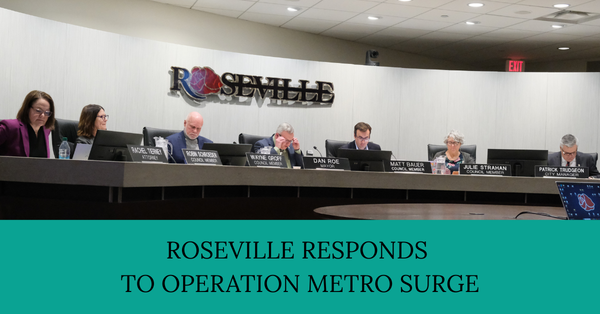
Disrupted attendance, trauma, and a groundswell of support for immigrant students
How the Roseville school community has mobilized in response to ICE

The presence of federal immigration agents in Minnesota has impacted Roseville Area Schools for months, leading to increasing absences, food and housing insecurity, and a groundswell of support mobilized by teachers, staff, and community members across the district.
Even after the announcement that the number of federal agents will be decreasing in Minnesota, the impact on the school community continues.
Throughout December and January, hundreds of students were regularly absent due to fear of immigration enforcement activity.
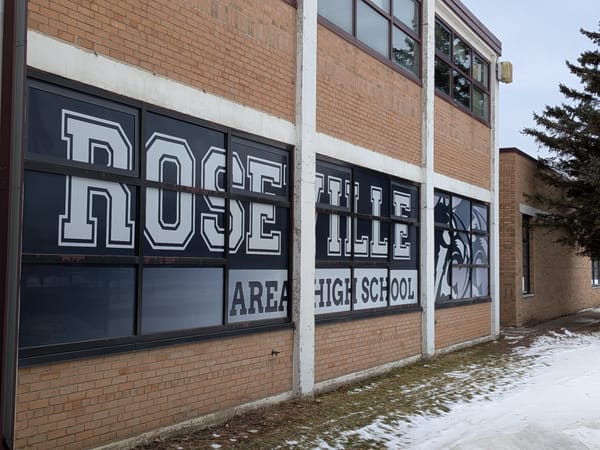
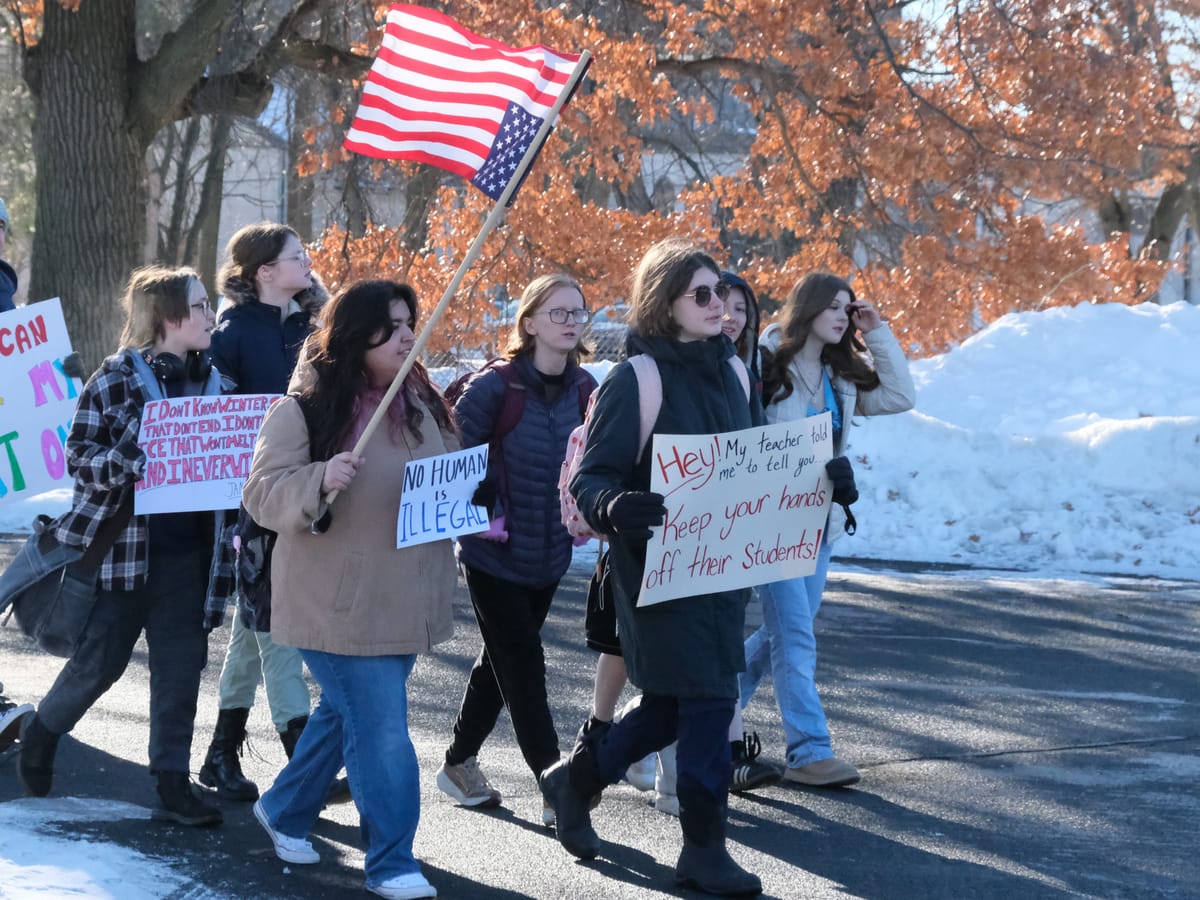
On Jan. 12, an estimated 700 high school students walked out for a student-led protest to raise awareness about the impact of Immigration and Customs Enforcement (ICE) on the school community. Later that day, the district announced the cancellation of all school field trips for the rest of the month due to safety concerns.
Federal agents were present on school grounds outside of Little Canada Elementary School on Jan. 21, the same day the district confirmed the presence of ICE agents using the parking lot at Aŋpétu Téča Education Center as a staging area.
"It is deeply disturbing that district space was used—without our consent—as a launching point for actions taken against our friends and neighbors," Superintendent Jenny Loeck said in an email to district families.
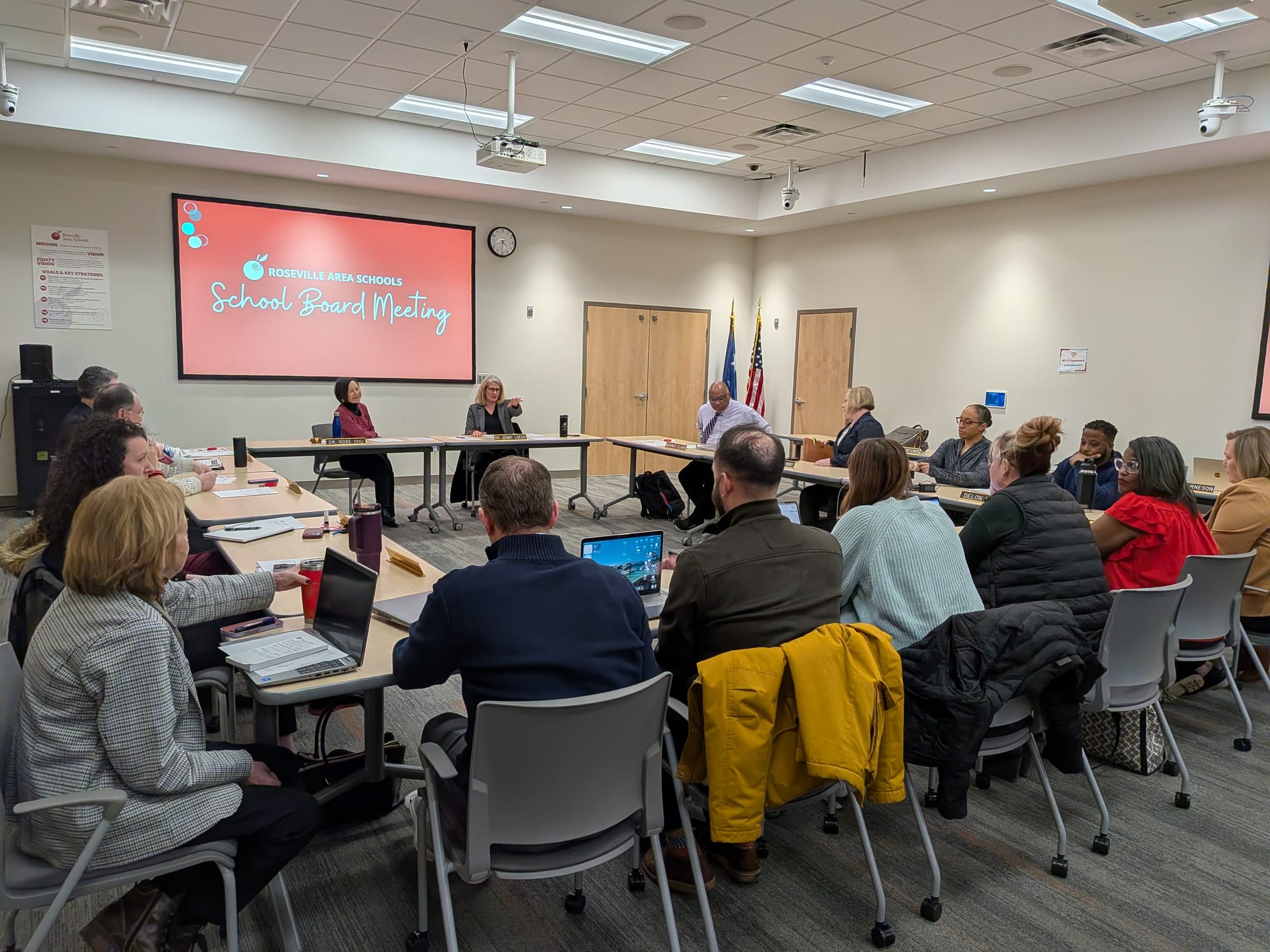
The Roseville Reader connected with teachers and attended the Feb. 10 school board work session to hear from district leaders and school principals to learn more about how students, staff, and teachers have been impacted.
Teachers on the Frontlines
Students and families often call teachers first when experiencing a crisis. Even when there are district-designated point people, teachers are usually the first to be called on by their students and families because of the trust and relationship they’ve built.
“The district has worked really hard to try to keep the load off of teachers as much as possible. I do want to recognize that. Teachers already have a lot to do. At the end of the day, just like in the Pandemic, teachers will still do what they do because they love their students,” said Maria Lê Selmer, first grade teacher at Central Park Elementary.
Lê Selmer is also the union president of Education Minnesota-Roseville. She’s heard stories from her colleagues and fellow union members about the impact of federal immigration enforcement on the school community.
BIPOC educators are especially impacted, but white educators have been targeted too, Lê Selmer said. Some teachers are carpooling to try to protect vulnerable colleagues. She knows teachers who have been boxed in by ICE while traveling from one school building to another. She knows teachers who have had family members detained, and then the next day need to report to work and be there for students who are dealing with the same thing.
“There are some very real things happening in our district,” Lê Selmer said.
The district could not provide any information about whether any students have been detained or had a family member detained by immigration enforcement, due to privacy laws.
At another elementary school, special education teacher Naomi Stenson has been driving a student to school who doesn’t feel safe taking the bus.
“He continually processes with me in the car rides why this is happening, his fears, his questions,” Stenson said in an email. Every Monday he reports back if there was a heavy ICE presence in his neighborhood and if any of his neighbors were taken.
Stenson independently raised almost $13,000 to supply rent and mutual aid for impacted families at her school and at other schools, before the PTA or other community structures were in place to accept donations. She said she’s been working roughly 10 hours a week on top of her regular teaching duties, including shopping, delivering groceries, and patrolling at her school and an area in the community where there has been significant ICE presence.
She met with another family whose children haven’t been attending school. The students’ parents are very concerned about their children’s grades and learning loss, but they don’t feel safe coming to school.
“Through an interpreter, but also the deep soul of human connection, despite the language barrier, we heard and visually saw the deep terror in sending their children to school. The parent expressed he wants to be as safe as possible,” Stenson said.
“These children should be learning, laughing, getting hugs, and enjoying a typical childhood, but instead they do not leave their homes for the fear of their safety. I had so many tears after the meeting. I just couldn't process what this is doing to their family and so many families,” Stenson said.
Distance Learning
Roseville did not move to distance learning for the whole district or even entire schools. Instead, the district made virtual options available to the students who needed it. Teachers are posting screencasts of their lessons on the online platform Schoology. Multilingual learners have the option to meet with their teachers on Zoom.
“Our focus has been on how to be respectful of the families’ wishes at the time, but also keep them connected and maintain that sense of belonging with area schools. How do we engage them in some learning while the attendance is disrupted?” Jake Von De Linde, director of teaching and learning at the district, said at the Feb. 10 school board work session.
Looking at attendance data for December 2025 - January 2026 compared with December 2024 - January 2025, most students in the district have been attending regularly. For a couple of elementary schools, attendance is even higher this school year.
But learning has been significantly disrupted in certain segments of the student population and certain buildings. All schools across the district in both primary and secondary levels have been impacted.
“Our approach may have seemed slow or not aggressive enough to some, but looking at the attendance data we were guided by what the most of our students needed,” Maura Weyandt, associate superintendent said at the meeting.
Teachers and district leaders compare the experience of pivoting to online learning to 2020 during the beginning of the Covid-19 Pandemic, but without the state and federal government funding.
Secondary Schools
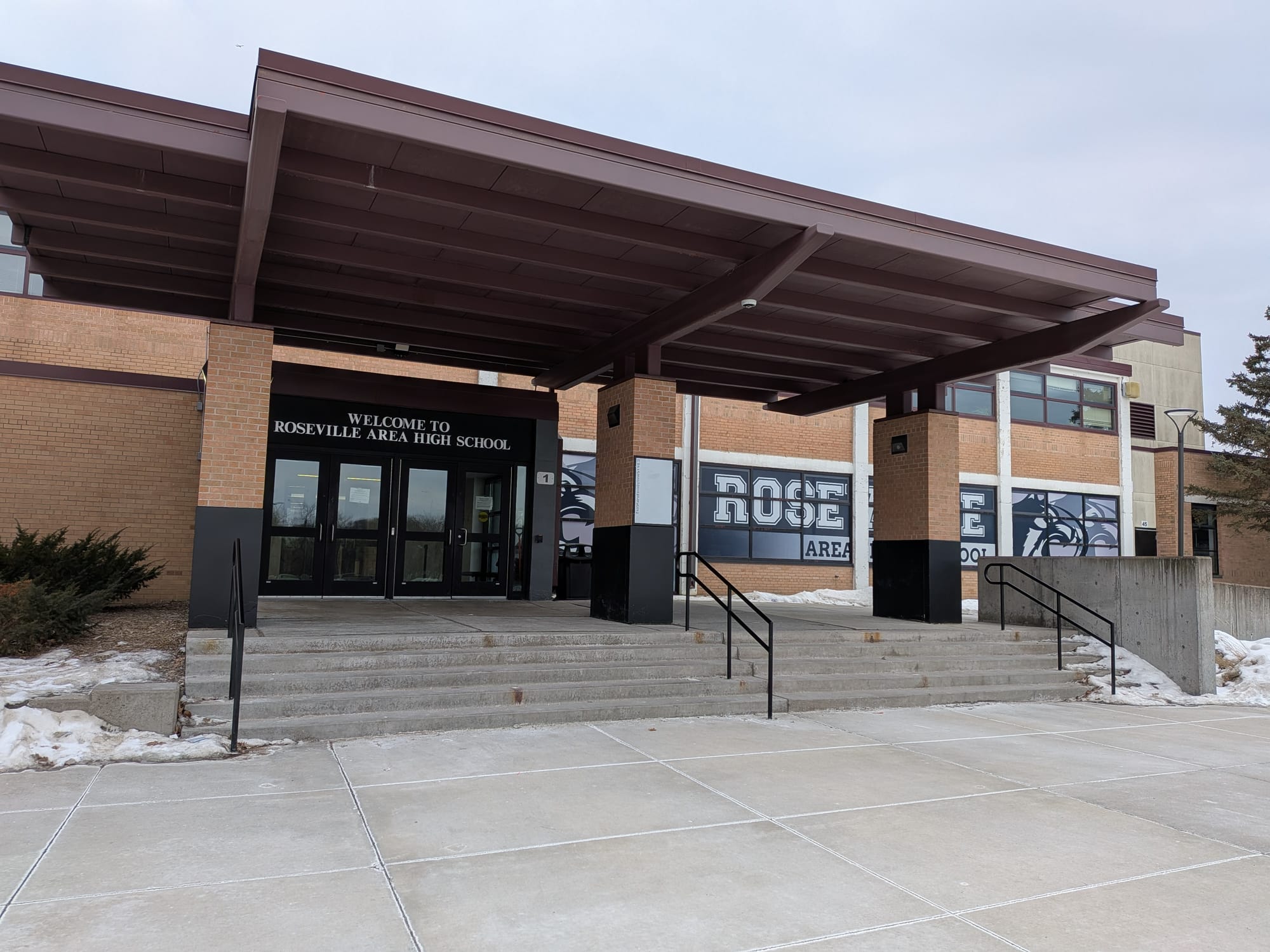
At the secondary level, which includes middle school and high school students, the number hovers around 160 students with regular absences directly related to immigration enforcement. But for all buildings, this number has fluctuated depending on the day.
At one point in January, Roseville Area Middle School (RAMS) Principal Heidi George cited 130 students absent and High School Principal Jen Wilson cited 100-250 students with disrupted attendance.
In the last couple of weeks, more students have started to return to school more regularly, but attendance is still sporadic.
“They look outside to see if it feels safe to go to the bus stop. If it does, they come. If it doesn’t, they stay home,” George said.
Recently, George met with a student on Zoom who said, “I just want to come back to school. I won’t skip class if I can just come back to school.”
And when he did come back to school, he said to the principal, “See, I’m in class!” George said at the meeting.
At the high school, some students are learning completely online while others are coming in once or twice a week to “check in.” If they feel safe to come to school, they’ll come because they love to be there, Wilson said at the meeting.
Wilson said that even though the attendance data doesn’t show a huge shift in absences compared to last year, it “feels very different in the building because we’re missing friends being there.”
Wilson said students need a certain number of credits to graduate, and there are seniors who have missed enough classes this year due to safety concerns that they are at risk of not meeting those requirements.
School counselors are beginning to meet with students who are most impacted to come up with a plan and some classes that are already available online are looking at increasing class sizes to accommodate additional students.
“There’s a lot that these seniors have had to be resilient through,” Wilson said. “They were seventh graders when Covid hit.”
On Feb. 10, the school board authorized a temporary amendment to school policy to allow students in grades 9-12 to request pass/fail grades in up to 5 out of 5 classes, instead of grades, for the rest of the school year. The purpose is to protect students' GPA and future academic opportunities.
Elementary Schools
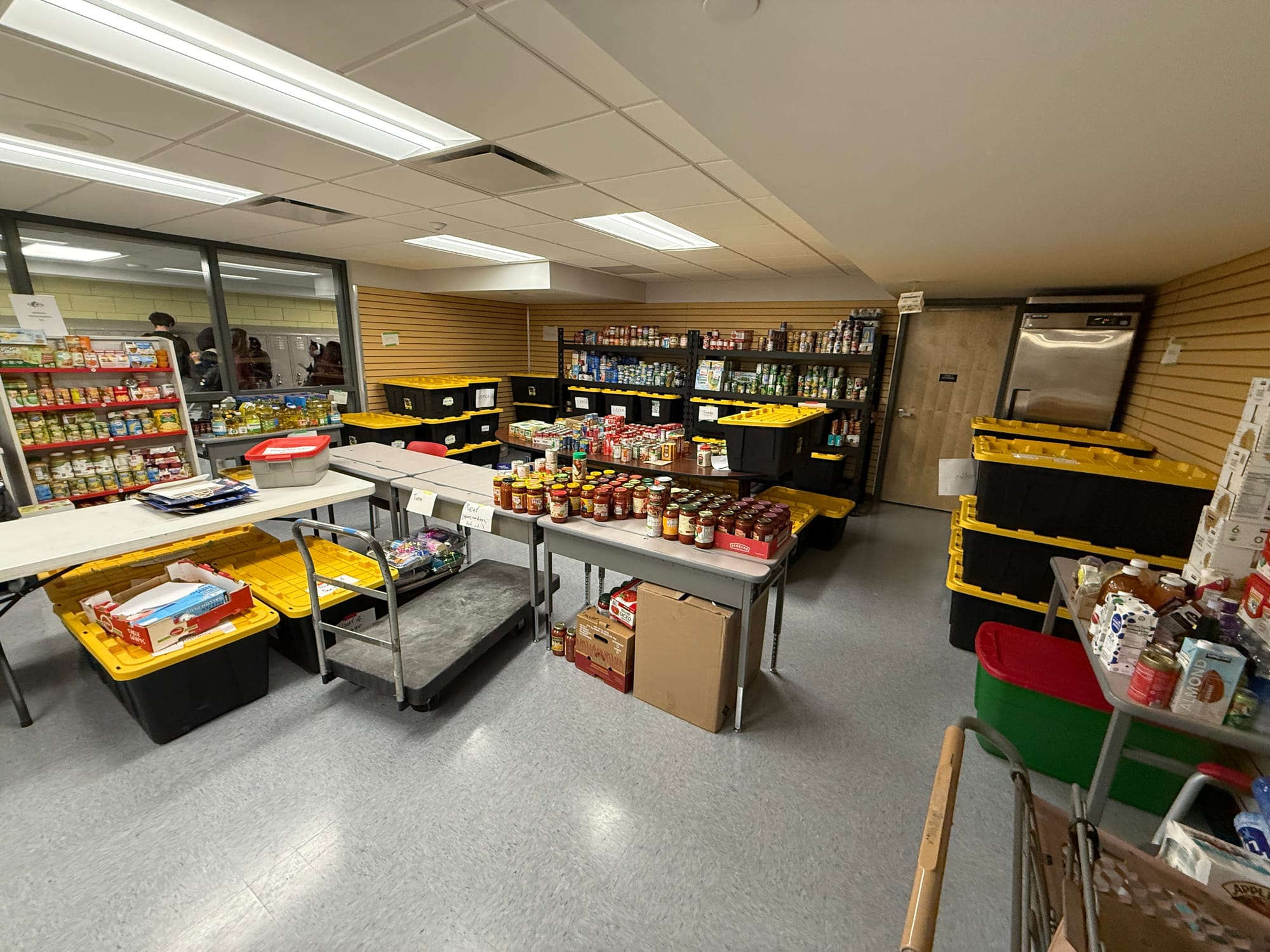
Approximately 200 elementary school students in Roseville Area Schools have had regular attendance disruptions specifically because of immigration presence in the area, according to district data shared with The Roseville Reader.
Little Canada Elementary in particular had a 10 percent drop in attendance in December and January this school year compared with last year.
“With the amount of students they have, this is a significant attendance drop,” Weyandt said.
Little Canada Elementary is a Dual Language Spanish Immersion (DSLI) school.
Distance learning options have been made available for children at Little Canada Elementary and other elementary schools for families who request it.
“We want to make sure they know we are being responsive to the feedback we’re receiving. They are afraid to leave their homes and they want their kids to continue to learn,” Little Canada’s Principal José Becerra said at the meeting.
Community Education
The Aŋpétu Téča Education Center houses several programs for various ages including Preschool, Adult Basic Education, and Fairview Alternative High School.
“We care deeply about their learning,” Director of Community Education Cyndi Arenson said at the meeting. Staff have been reaching out weekly to Pre-K families who are absent to supply food, books, toys, and materials to learn.
There are 132 students who take Adult Basic Education (ABE) classes at Aŋpétu Téča.
“At one point we had 51 students attending. That number is drastic,” Arneson said. “Those numbers shot back up to 130 after online learning.”
They returned to daytime classes the week of Feb. 16 due to student demand.
“We are hearing from our community that they need the community,” Arenson said.
Learning Loss and Mental Health
Over the past couple of weeks, attendance has started to improve across the district. There will be a disproportionate gap in learning for the students most impacted by federal immigration enforcement activities, district leaders say. They are already planning summer programming to help address it in addition to the support they’re able to offer right now
“Significant attendance disruptions cause additional work for teachers as they adjust their pacing and work to catch up students that have been absent. It impacts the school and classroom community. I mention this, as yes, the attendance numbers are starting to go back up, the work remains,” associate superintendent Weyandt said in an email.
School leaders are concerned about the mental health of their students and staff.
At the end of January, students at RAHS did an activity in Homeroom where they sat in circles and had the opportunity to share anything they wanted to.
“You have to be very careful with what you say and what you share about your own personal political beliefs,” high school principal Wilson said. “Giving students opportunity to share was powerful.” Homeroom teachers told Wilson that kids acknowledged that it was both difficult and helpful to talk about how they were feeling.
At RAMS, staff are taking a different approach. Developmentally, most middle schoolers don’t want to share about their feelings in a group. Students have told teachers that they don’t want to talk about it and they don’t want people asking them questions about their experiences.
So instead of group sharing opportunities, RAMS is connecting impacted students with a trusted adult for one-on-one check-ins to start their day.
“You don’t have to feel embarrassed asking questions or crying or having a moment,” middle school principal George said.
The DSLI and Multilanguage teachers are connecting with each other once a week to support one another and discuss problems. And Human Resources has been reminding staff about the Employee Assistance Program for additional mental health supports.
Community Support
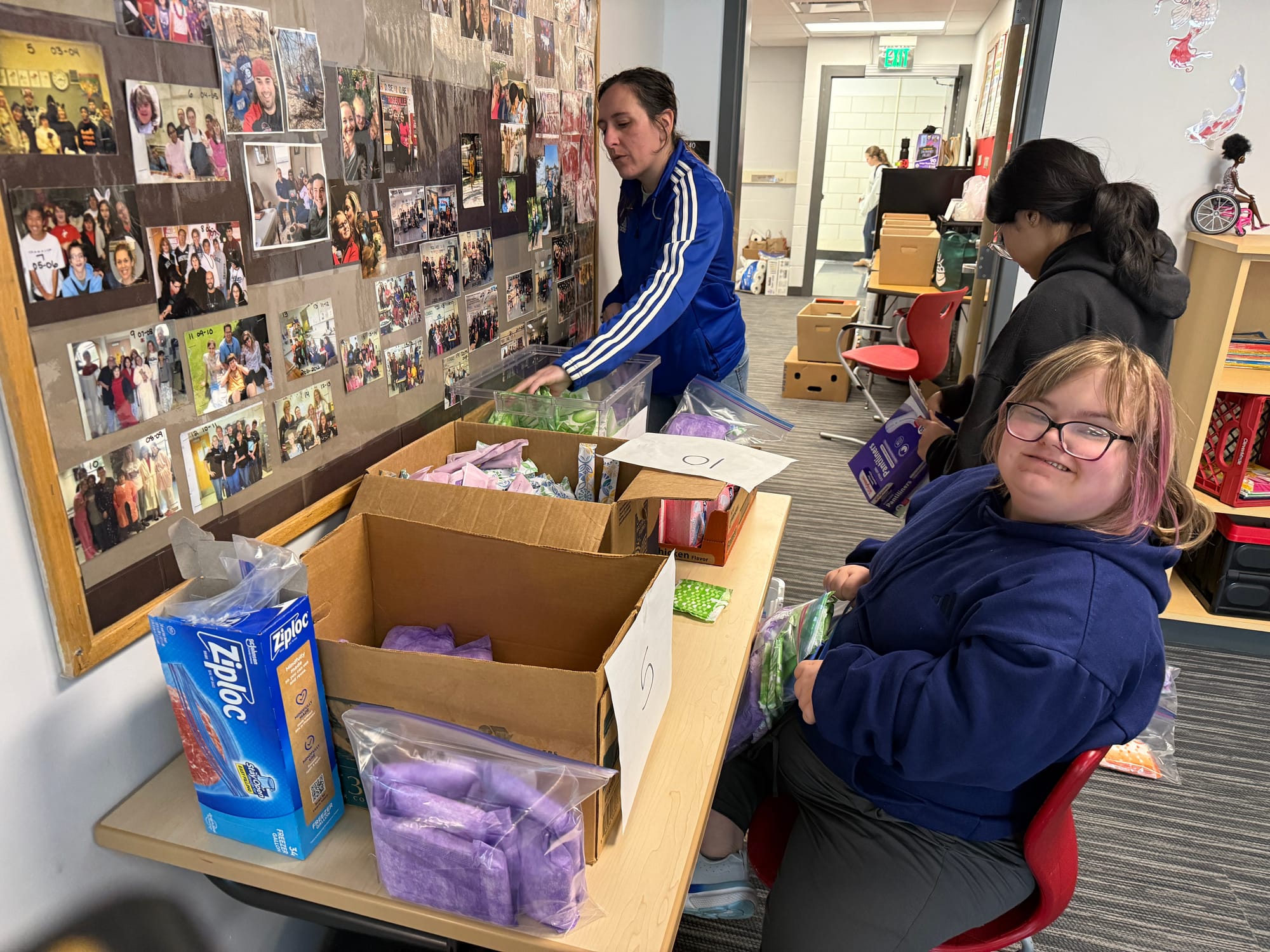
Parallel to school absences are work disruptions for district families. This has led to an increased need for food and financial support.
The community has stepped up to offer support to families in need in the district by donating money, gift cards, food, and personal supplies for distribution. Over $100,000 has been donated for food, supplies, and rent assistance via community nonprofits and community members. These donations continue to pour in.
"We are especially grateful for partners like Do Good Roseville, St. Michael’s Lutheran Church, Roseville Lutheran Church, the Roseville Area Schools Foundation, and the Roseville Area Community Foundation, along with dozens of organizations and hundreds of volunteers who have stepped forward so generously," Superintendent Loeck said in an email.
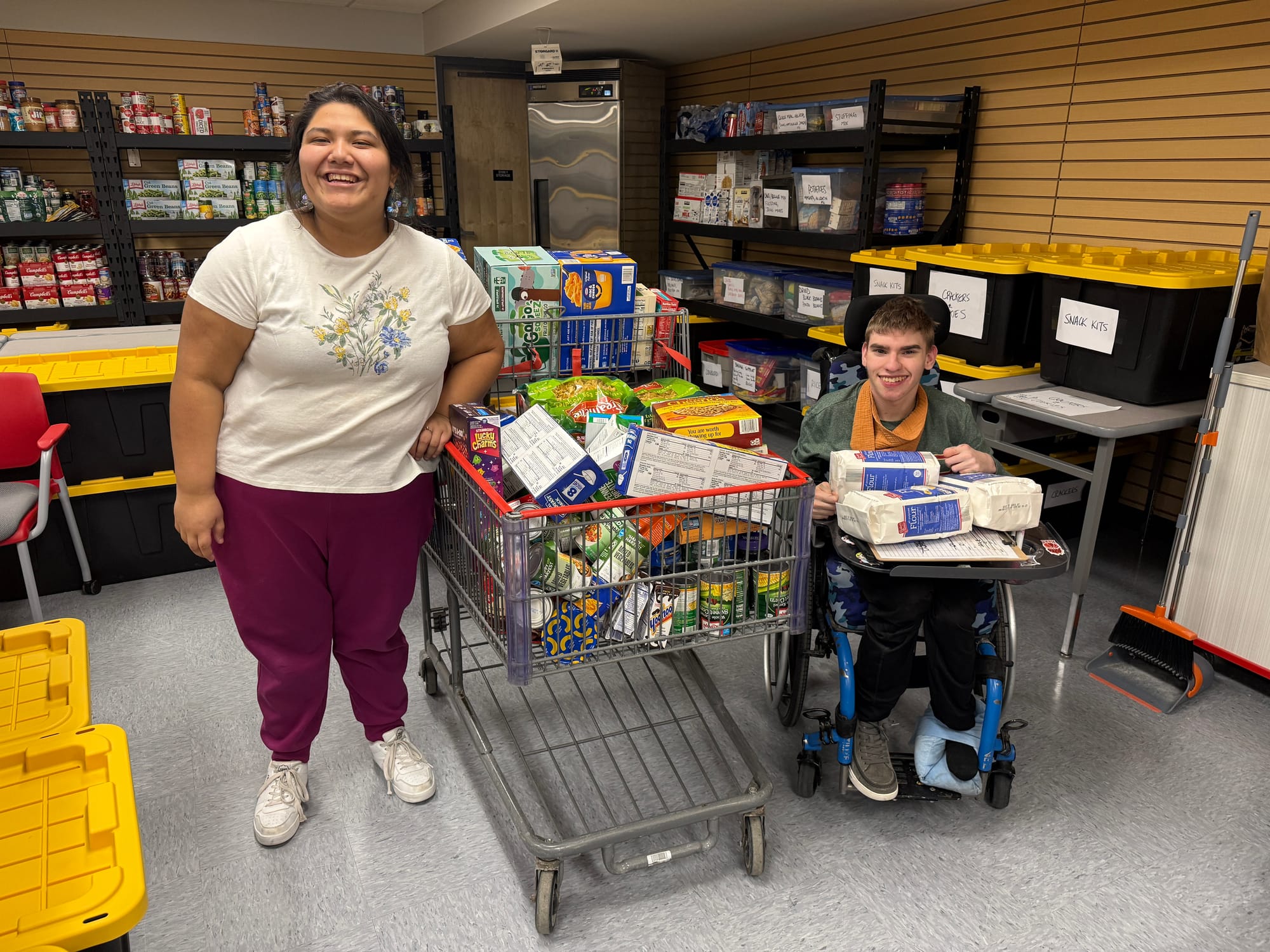
Groceries and personal supplies are purchased with those donations to support families that are homebound or out of work due to safety concerns. Community volunteers are coming to RAHS and Little Canada twice a week to sort and pack groceries and supplies for distribution. Refrigerators were donated by community members to keep groceries fresh. School social workers identify the families who need the donations and then teachers make the deliveries. Teachers are volunteering to do this because they want to, but it has a practical and legal benefit too. Schools can’t disclose student addresses to community volunteers.
School staff are also picking up laundry from homebound families and community members are washing it, before staff return it to the families.
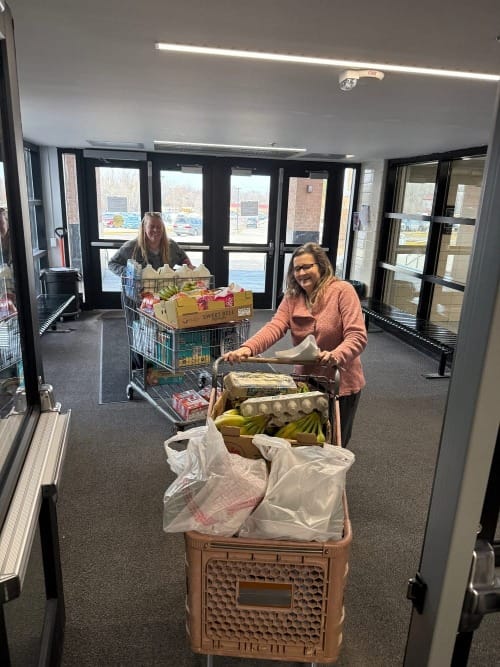
Families at individual schools have also organized to support vulnerable families by going to bus stops where there are high immigrant populations. Community volunteers and school staff are also helping before and after school to be a presence outside. School staff are in constant communication with community volunteers and PTAs.
“At first it was very overwhelming to get all the emails offering to help,” Becerra said at the meeting.
Now, there’s a process and a system for dealing with donations and collaborating with volunteers.
RAHS and Little Canada Elementary buildings are serving as the hub for processing and distributing the goods to families across the district. Other schools are holding food and supply drives too.
“It’s horrible, and look at what is happening. All the systems that got built as a result of how the community showed up. Educators stepped up. That’s an amazing story,” School Board President Dr. Rose Chu said at the meeting.
School board director Michelle Morse-Wendt said she has observed community members in high-vis vests standing out in front of a trailer park in her neighborhood. She sees observers there very early until late in the day.
“This is just showing that in our community, there is more good. And I stand by that,” Morse-Wendt said.
"On behalf of Roseville Area Schools, I want to sincerely thank our community for the incredible outpouring of care as we respond to concerns related to federal immigration enforcement. From food and rental assistance to volunteer hours as observers, organizers, and delivery teams, their compassion has made a real difference for our students and families," Superintendent Jenny Loeck said in an email.
"We also know our work isn’t done. The ongoing impact on our students and families will require continued collaboration to ensure every student and every family feels safe and supported," Loeck said.
ICYMI
 Naomi Krueger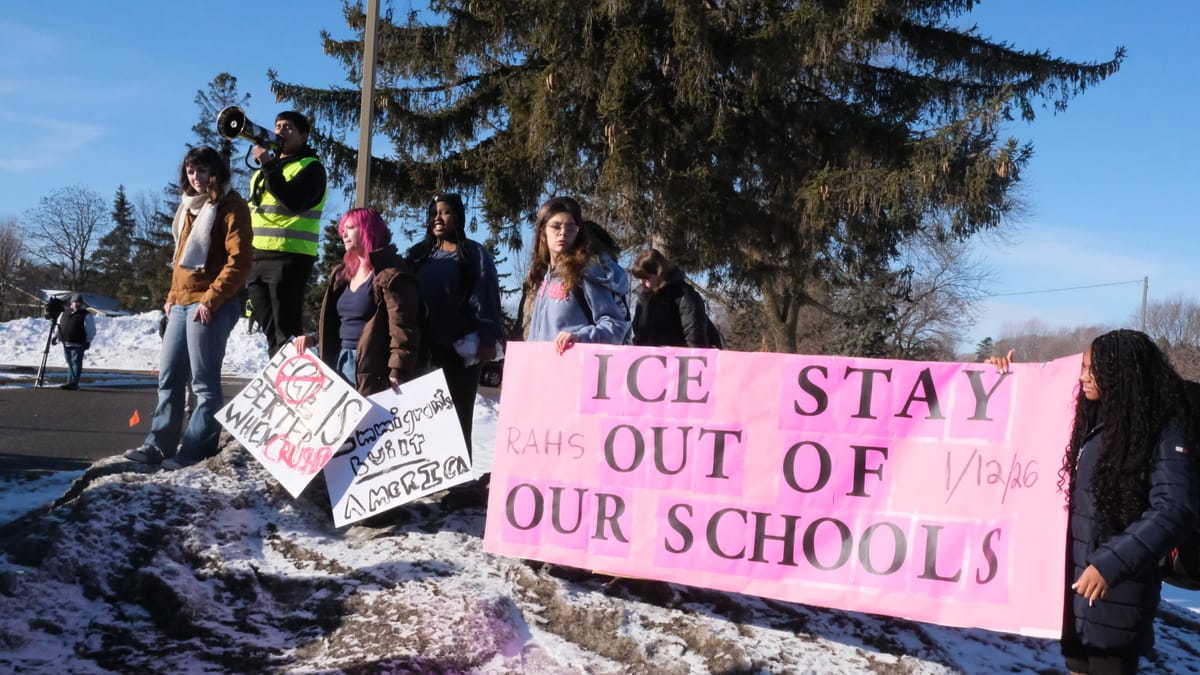
 Naomi Krueger
 Naomi Krueger