Growing the Rice Street Gardens
City, county, and community collaboration makes this garden possible

Tucked amid the car dealerships and restaurants north of McCarrons Lake on Rice Street in Maplewood, the Rice Street Gardens is an urban agriculture oasis.
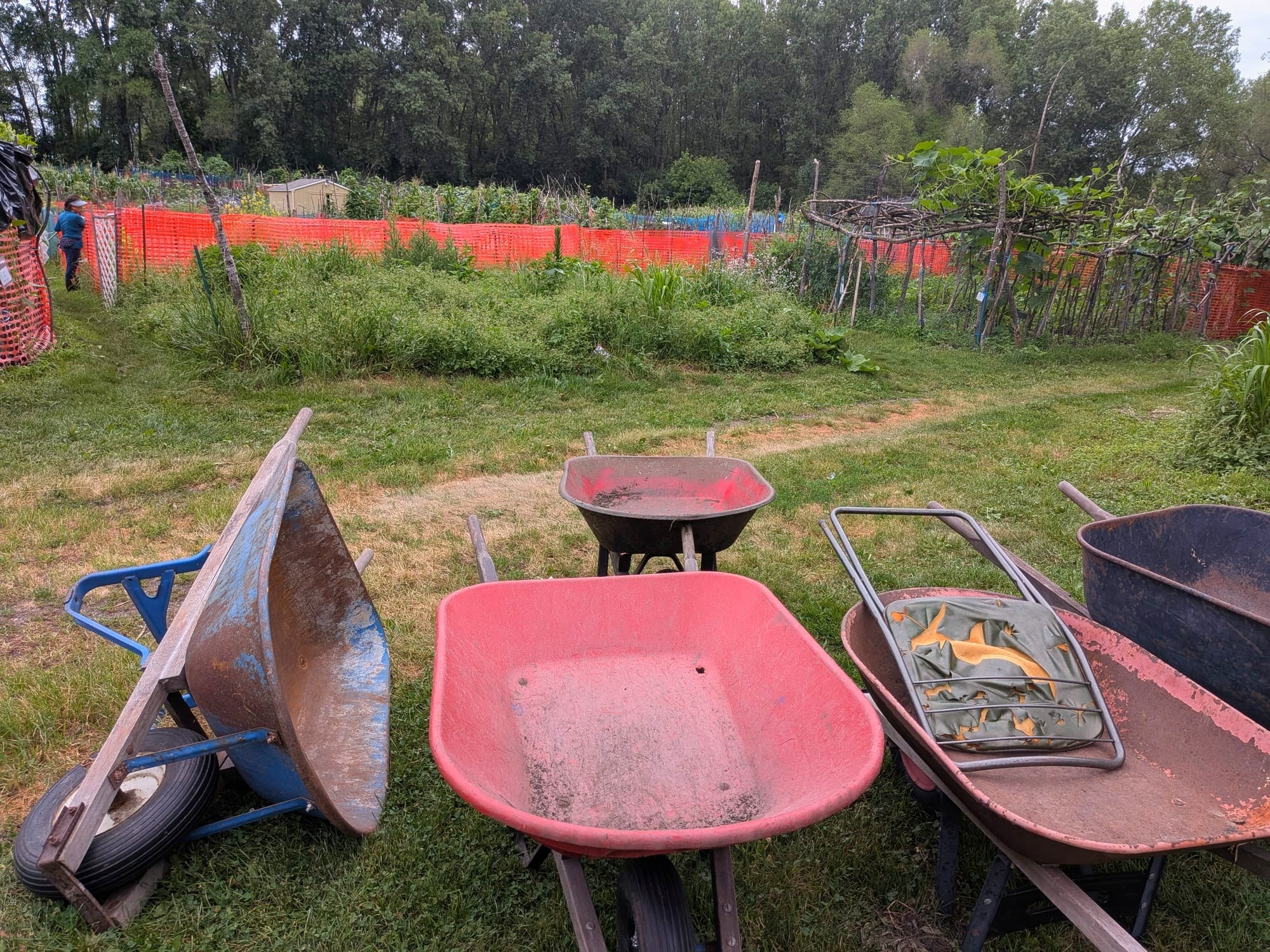
Bright plastic fencing, wood, wire, and lattices built from tree branches mark 260 garden plots on the east side of the street bordering Roseville. Woods border the back edge of the plots, with green plants dotting the 16- by 20-foot individual gardens.
Gardeners sign up for spaces in February and March, with each spot rented for $20 for the season. There are usually 40-50 people on a waiting list. The plots are larger and less expensive than many other community gardens, says Ron Peterson, who was one of the founders of Rice Street Gardens, which opened in 2015.
Growers are not allowed to use chemicals in the gardens. It is strictly organic.
About two-thirds of the gardeners are recent arrivals to the Twin Cities, including Nepali, Somali, and Karen immigrants, Peterson says. Karen and Nepali residents make up more than 70 percent of the gardeners, according to the Rice Street Gardens website.
“It’s at the heart of how they’ve lived for centuries,” Peterson says. “It feeds families for a big chunk of the year.”
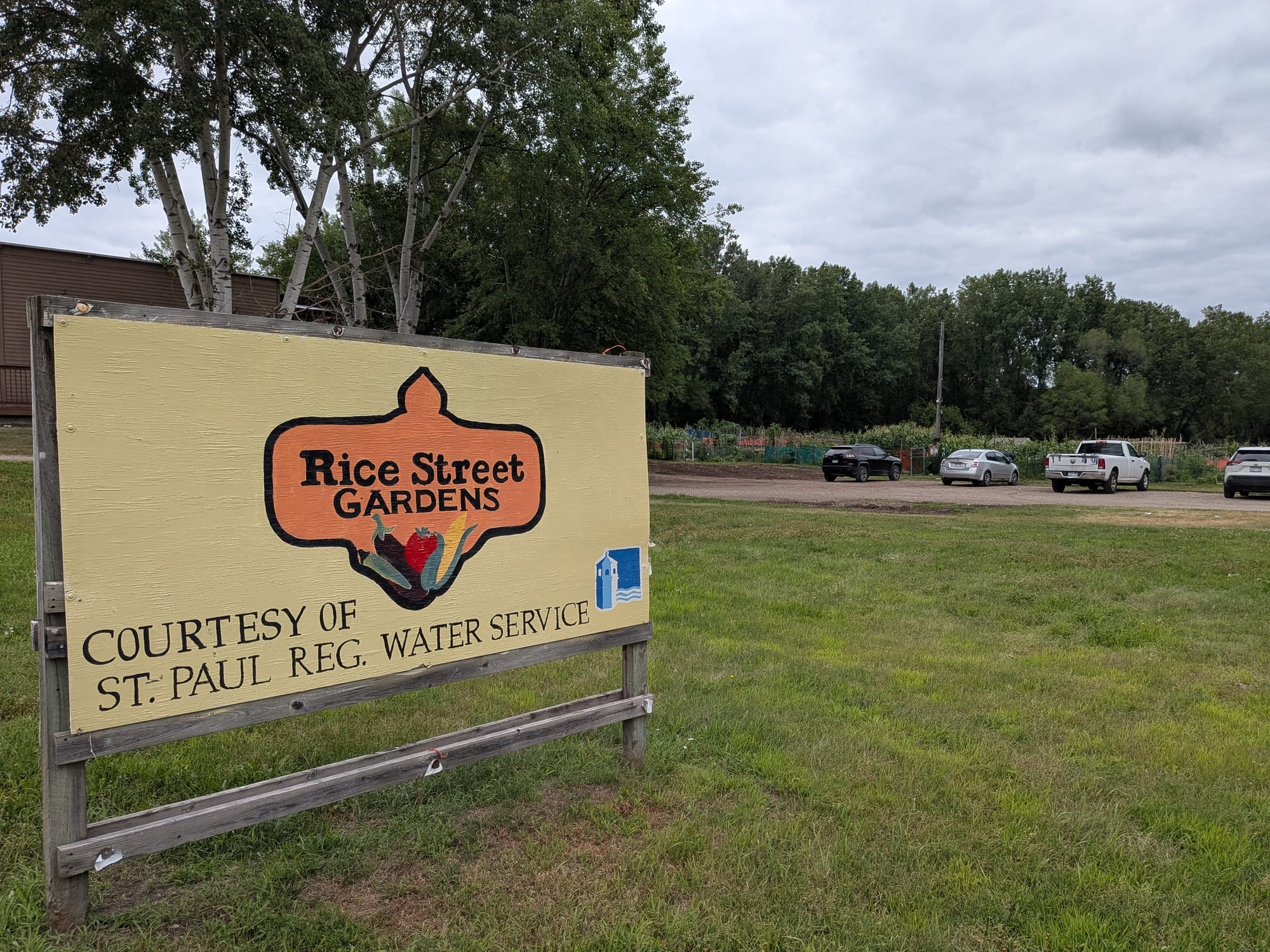
The land is part of nearby St. Paul Regional Water Services. Peterson says the gardens use about 3 acres of a 16-acre space. It ranks as the third largest communal growing space in Ramsey County, according to CamerAn J. Bailey, the county’s Urban Agriculture Coordinator.
There are 130 communal growing areas in Ramsey County across 14 cities, totaling just under 40 acres of land, Bailey says. Communal growing areas includes community gardens, community farms, community orchards, giving gardens and food forests.
But it wasn’t just a matter of mapping out the plots to get Rice Street Gardens started, Peterson says. City and county approval was needed. In some cases, there was no precedent, so ordinances had to be created.
Galilee Lutheran Church across the street was instrumental, Peterson says.
“I’d been thinking about a community garden for a long time,” he says. “The pastor (the Rev. Dana Nelson) and I thought it was a good idea.”
They dug in.
“We kind of went down this path,” Peterson says.
Founding leader Katheryn Schneider played a key role in getting St. Paul Regional Water Services to let them use the land. Sherry Sanders, Schneider, and Peterson got the project moving.
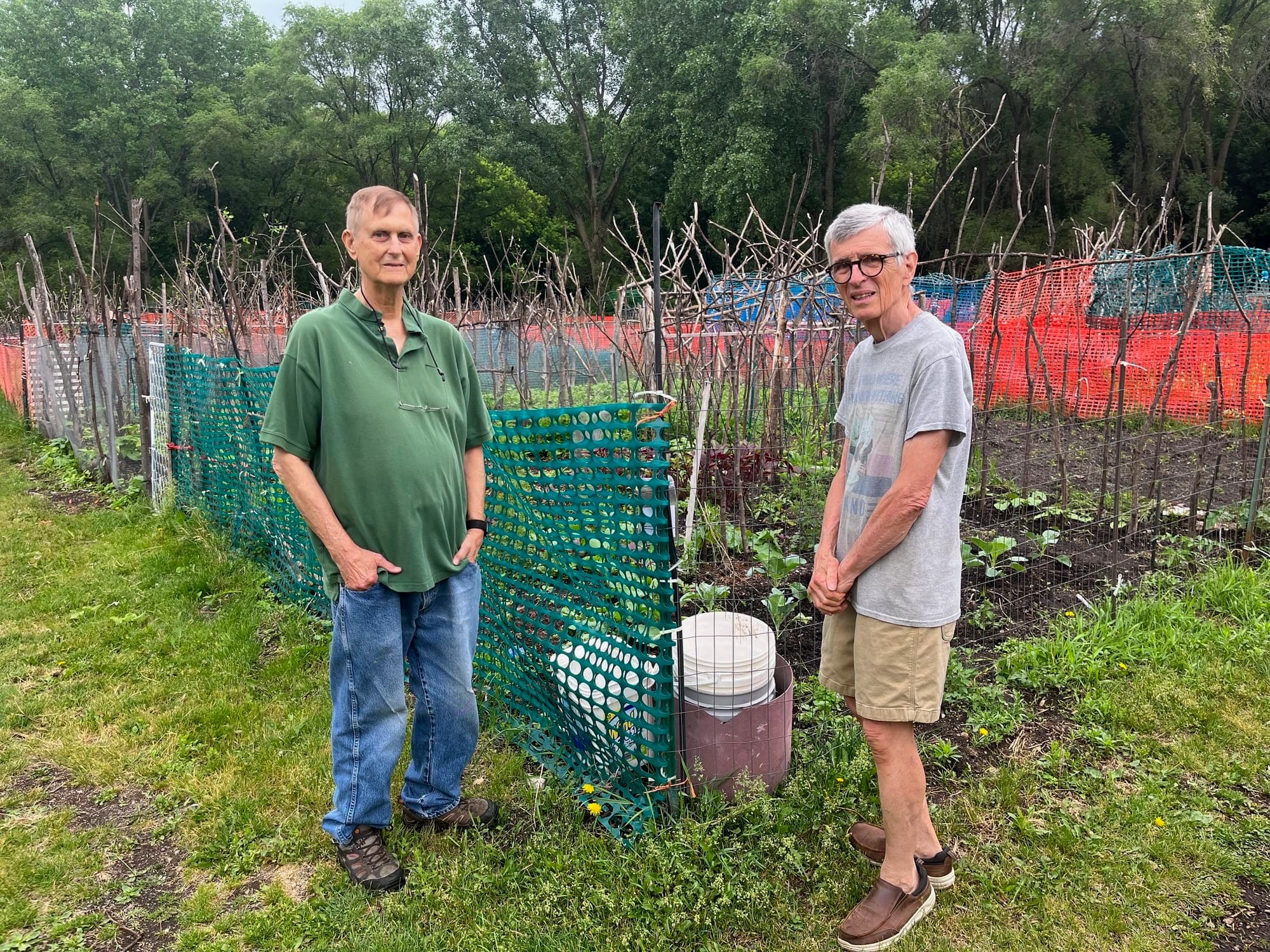
On a spring morning, Peterson and Gene Ranieri, a master gardener who has volunteered at the community garden for four or five years, talked about the garden’s special features.
Rice Street Gardens has nine water spigots and seven water barrels. McCarron’s Pub & Grill next door lets them access well water. There are tools to share, as well as a mower and gas-powered tiller. The City of Roseville provides compost.
Gardeners stopped to show off edible greens they had collected. Ranieri helped a man with the tiller. They peered over fences at neat rows of plants in some plots and intricate structures for climbing vines. Some of the plots had been rented, but not planted.
On weekends, Ranieri says there are dozens of gardeners and their families tending their growing produce.
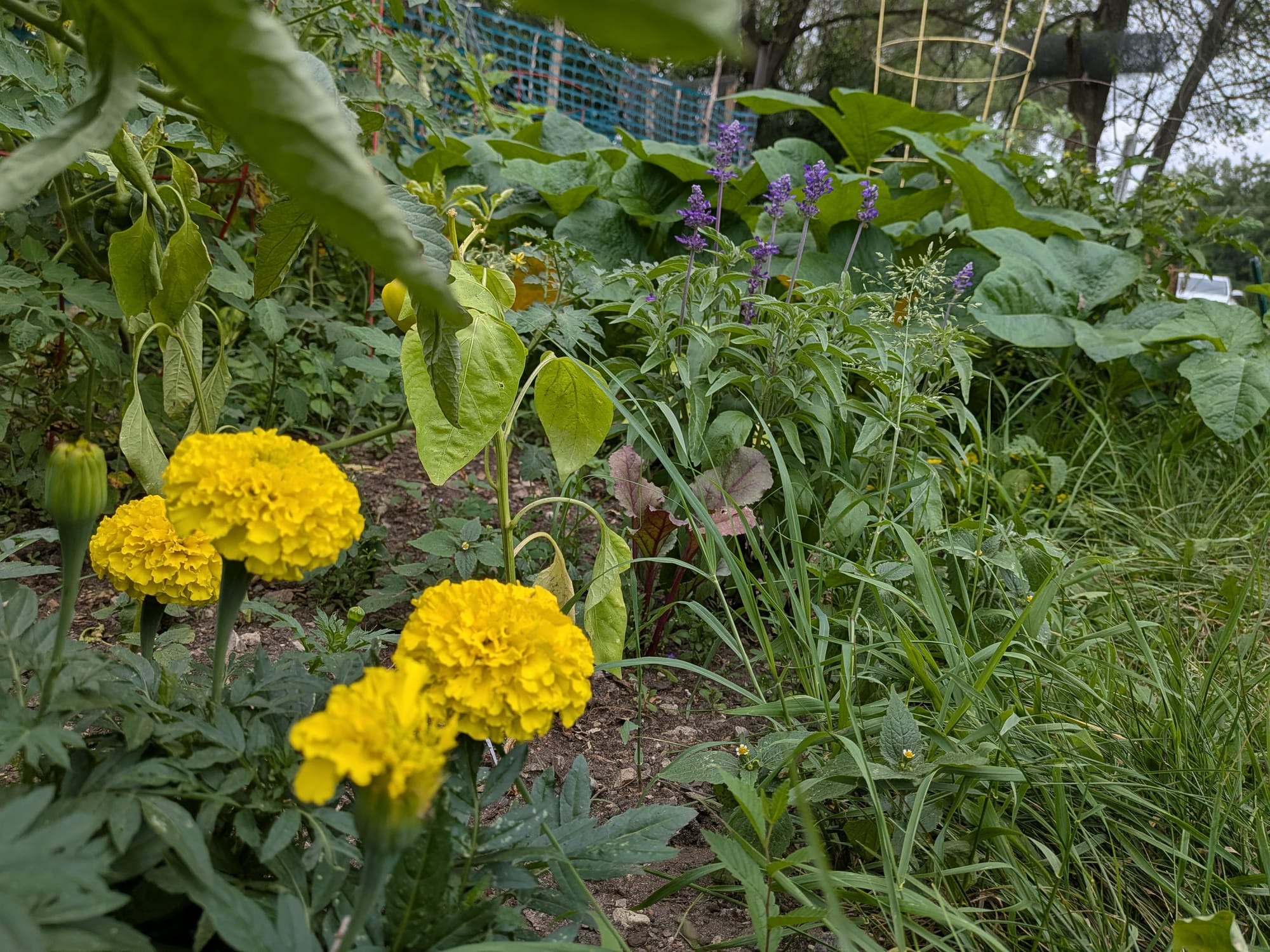
Bill Blair of Maplewood, who is active in the organization and has had a plot in the garden since it started, stopped by to pick bugs off the potatoes he’s growing. He has more than 20 years in agribusiness experience and a degree in ag education.
The gardens have two part-time employees—a manager and a worker to do mowing and maintenance. The money to pay them was generated by a fundraising effort in 2023 when the St. Paul Regional Water Services was considering selling the land for development, but decided against it.
Peterson and Ranieri say the all-volunteer governing board could use some younger members. “We desperately need new leaders,” Peterson says. They are also hoping youth-focused organizations might get involved.
Learn more