City council to discuss restrictions for ICE in Roseville
Resident requests lead city council member to initiate discussion at Monday's meeting

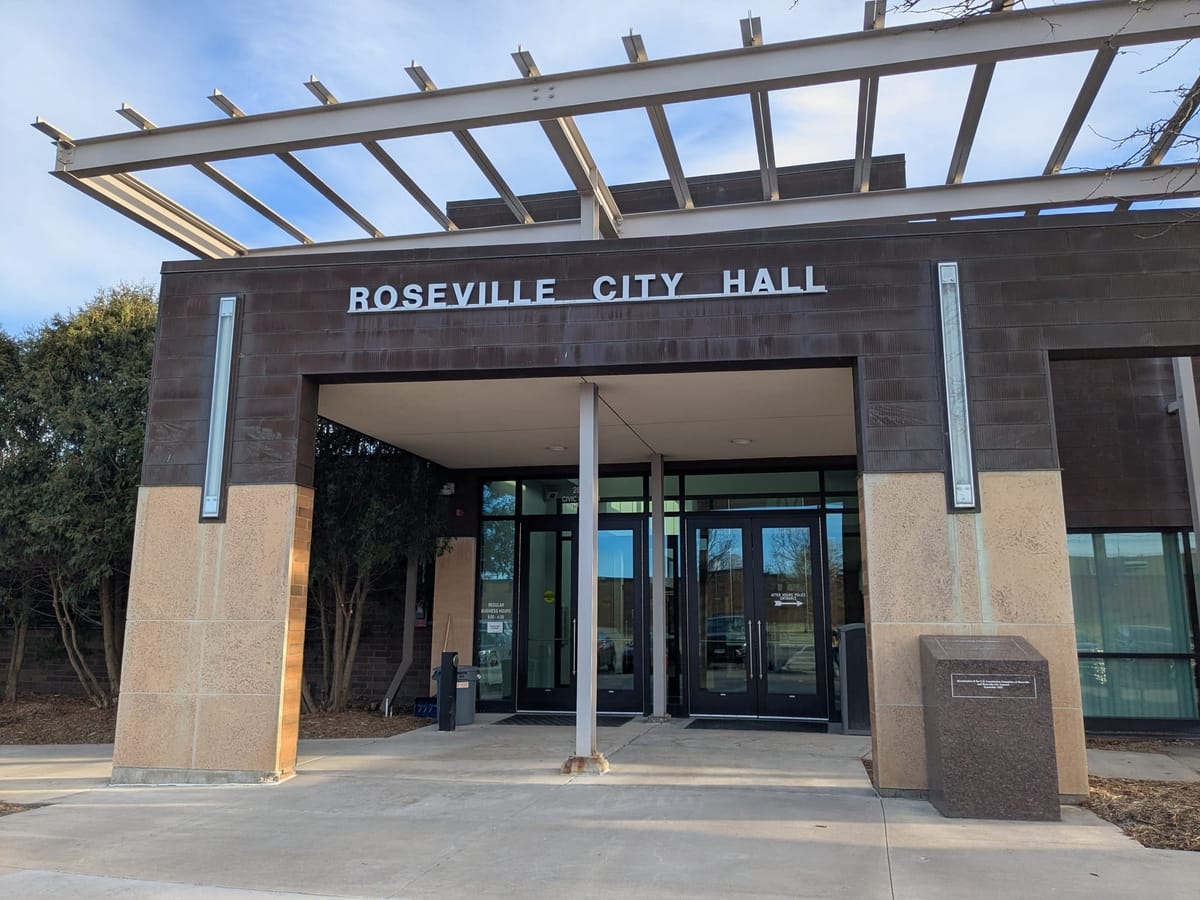
The Roseville city council will be discussing whether to add additional restrictions and expectations for how federal immigration enforcement agencies can use city resources and property at the city council meeting on Monday, Jan. 12.
"I have received numerous emails and phone calls requesting the city to investigate doing more to limit the city’s involvement with ICE even more following the tragic incident on Wednesday," City Councilmember Matt Bauer told The Roseville Reader.
On Jan. 8, Bauer requested that the city manager add an agenda item to Monday's meeting for "a discussion about the expectations and restrictions of DHS, ICE and associated agencies regarding the use of City resources, including property, staff and data," according to Bauer's request for council action.
What does this mean logistically? The city council could decide this is an item for a future meeting or they could move to discuss it right away, or a combination of both. City Manager Pat Trudgeon believes that the intent is to have a direct discussion about this topic on Monday night, but final decisions may not be able to made in one meeting. The city council could instruct the city attorney to come back to a future meeting to explain what the city is able to do under the law.
"It will take us some time to evaluate what additional limits are possible. I know other cities, such as Burnsville, are doing the same and have spoken with a council member there about having our attorneys assist each other," Bauer said.
Another meeting within the same week is possible, provided they follow Minnesota's Open Meeting Law. By law, when a special meeting is called outside of the regular schedule, the public body must post written notice on its principal bulletin board or usual meting room door three days in advance of the meeting. The public body must also deliver notices to people who requested them or publish a notice in the city's official newspaper of record. (For Roseville, that's the Pioneer Press.)
There is also the option of calling an emergency meeting. According to state law, "an emergency meeting is one where circumstances will not permit the public body to wait three days to give notice of a special meeting."
If the city council chooses to adopt or revise an ordinance, state law requires the city to publish notice of the proposed ordinance at least ten days prior to the ordinance being considered. Read more about the steps for revising or adopting new ordinances from the League of Minnesota Cities.
Separation Ordinance History
This is not the first time the Roseville city council has seriously considered further restrictions on how the city can cooperate with federal immigration enforcement.
In 2017, the Roseville city council considered becoming an official “Sanctuary City” but the council voted against adopting this designation in a split vote. However, the council did amend city policy to specifically prohibit the Roseville Police Department from inquiring about a person’s immigration status unless it is directly related to a criminal investigation. And Roseville Police are not authorized by the federal government to enforce federal immigration laws. Read more about it in this September 2017 article from the Star Tribune.
This discussion stemmed from a community listening and visioning initiative called Imagine Roseville. You can view the report summarizing the community's aspirations about immigration here, which included an option for the city to institute a "separation ordinance."
Twin Cities nonprofit organization The Advocates for Human Rights defines a separation ordinance as "policies that prohibit the collection of immigration status when not legally required and that prohibit the use of local law enforcement resources in actions carried out solely to detect, arrest, or detain a person based on their immigration status."
Bauer's request for council action did not use the term "separation ordinance."
City policy does allow for members of the RPD to assist ICE in the following circumstances with supervisor approval:
"Members of the department are authorized to assist ICE when it is related to scene safety and/or the safety of ICE employees as they perform their duties. Members of the department are authorized to cooperate with a task force involving ICE agents as long as the focus of the task force is not immigration enforcement.
Member of the department will cooperate with ICE as specifically mandated by federal and state laws."
ICE Presence in Roseville
Roseville residents have posted on social media about witnessing ICE agents around Roseville this week, but the Roseville Reader has been unable to independently confirm any details. Mayor Dan Roe and Roseville Chief of Police Erika Scheider did not return requests for comment.
"Unlike other law enforcement agencies both at the state and federal levels, ICE doesn’t share with the Roseville Police Department their plans. I learn about incidents only if they are shared with me," Bauer said via email. "I just got off the phone with a university student studying pre-med that's home over the break and was stopped by ICE in the Dick’s parking lot at Rosedale Center this afternoon."
In his request for council action, Bauer specifically calls for "corrective action" regarding ICE not meeting Roseville's expectations for professionalism and transparency.
"As a result of the poor level of professionalism, training, openness and cooperation of all aspects of ICE, Roseville should limit its interaction and support until corrective actions are taken by ICE. Roseville staff should investigate what limitations may be placed on ICE related to Roseville property, staff and data," Bauer wrote.
Monday's City Council Meeting
The Jan. 12 city council meeting begins at 6:00 p.m. and the discussion about potential restrictions and expectations related to federal immigration enforcement in Roseville is estimated to begin around 8:00 p.m., according to the posted agenda.
Residents can give public comment during the meeting and can also submit written comments via email.
Update: This article has been updated since initial publication to include information about how cities can adopt or revise ordinances.