Roseville teacher contract negotiations heat up
Strike unlikely as bargaining continues

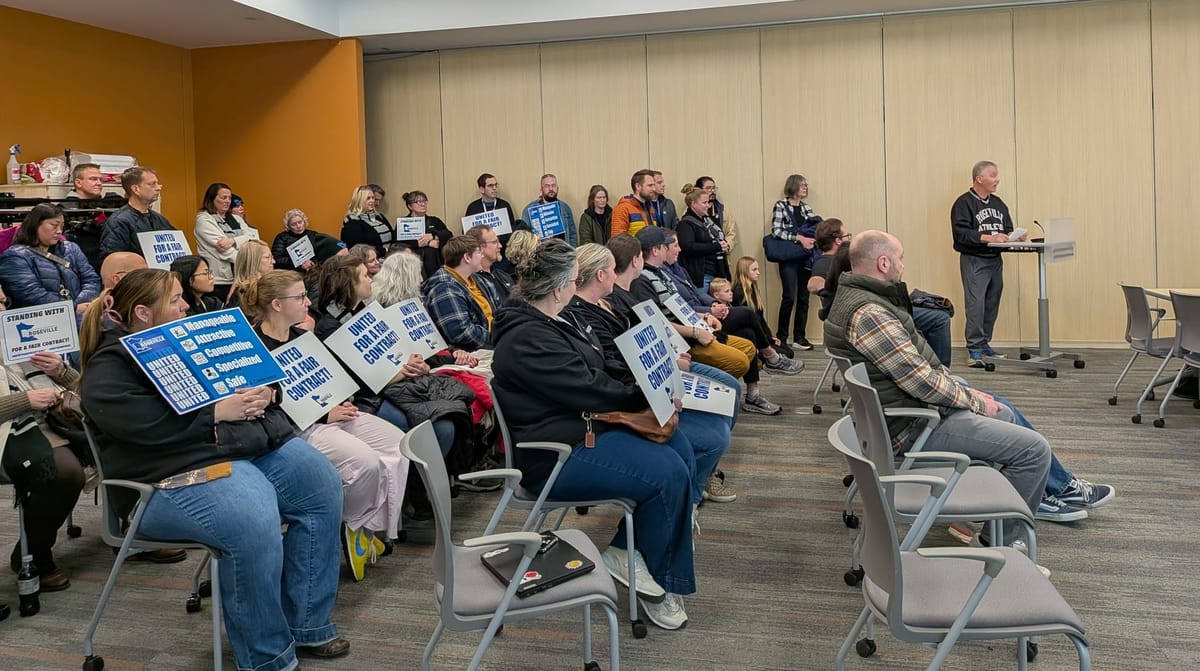
The Education Minnesota-Roseville teachers union is turning up the heat as contract negotiations continue with the Roseville Area School District.
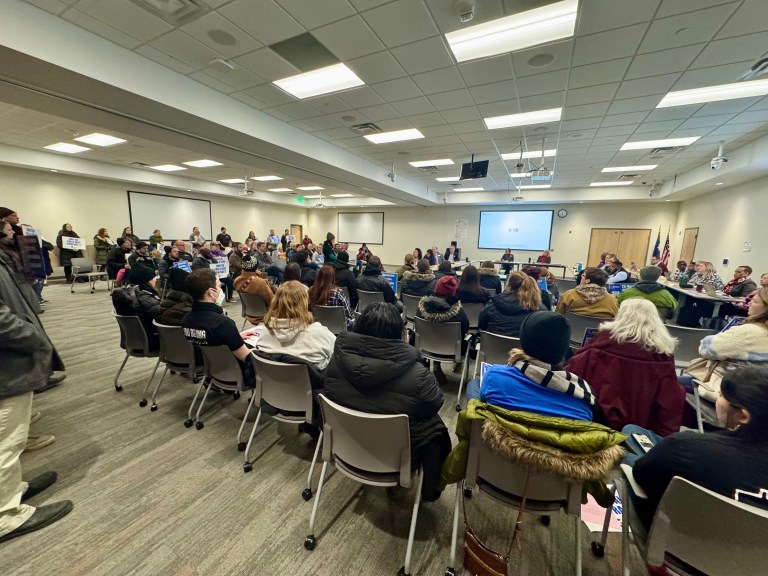
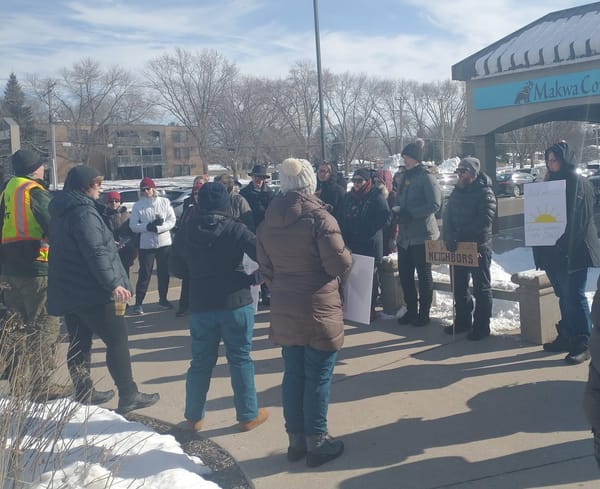
Union members have been drawing more public attention to the contract negotiations in recent weeks by posting more frequently on social media, coming as a group to the community input session before some school board meetings, and showing solidarity by walking in and out of school buildings together at the beginning and end of their contract hours on certain days.
“Our district functions the way it does because teachers put in significantly more time [than contracted]. That is not new to Roseville, obviously. It’s everywhere. That’s how teachers are. But it’s also just saying that we have contractual rights and we need to make sure that the school board continues to do what they have always done,” Maria Lê Selmer said. Lê Selmer is the president of Education Minnesota-Roseville and a first grade teacher.
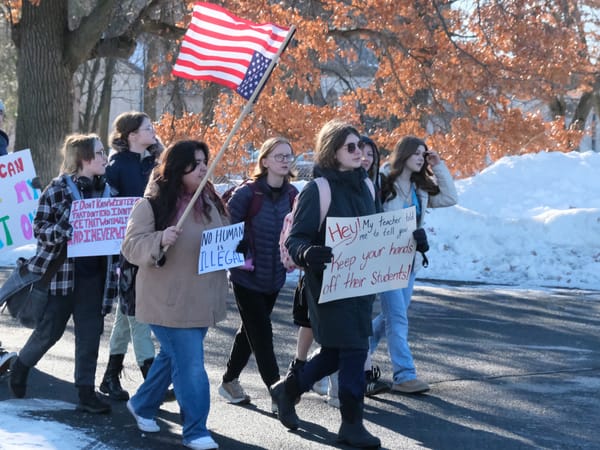
By walking in and out together, union members are making a statement about the fact that a teacher’s work is rarely complete after eight hours. Many of the teachers who walked out in solidarity went right back in to finish working or brought heavy bags of grading and other work to finish at home.
Lately, many teachers have also been going above and beyond to support immigrant students by preparing lessons for distance learning, delivering groceries, or providing translation support to colleagues who only speak English.
“It really sucks bargaining at this time and I really think our union wants to put this behind us so we can really put our whole effort into helping our community thrive. Because right now, they’re really suffering,” Lê Selmer said.
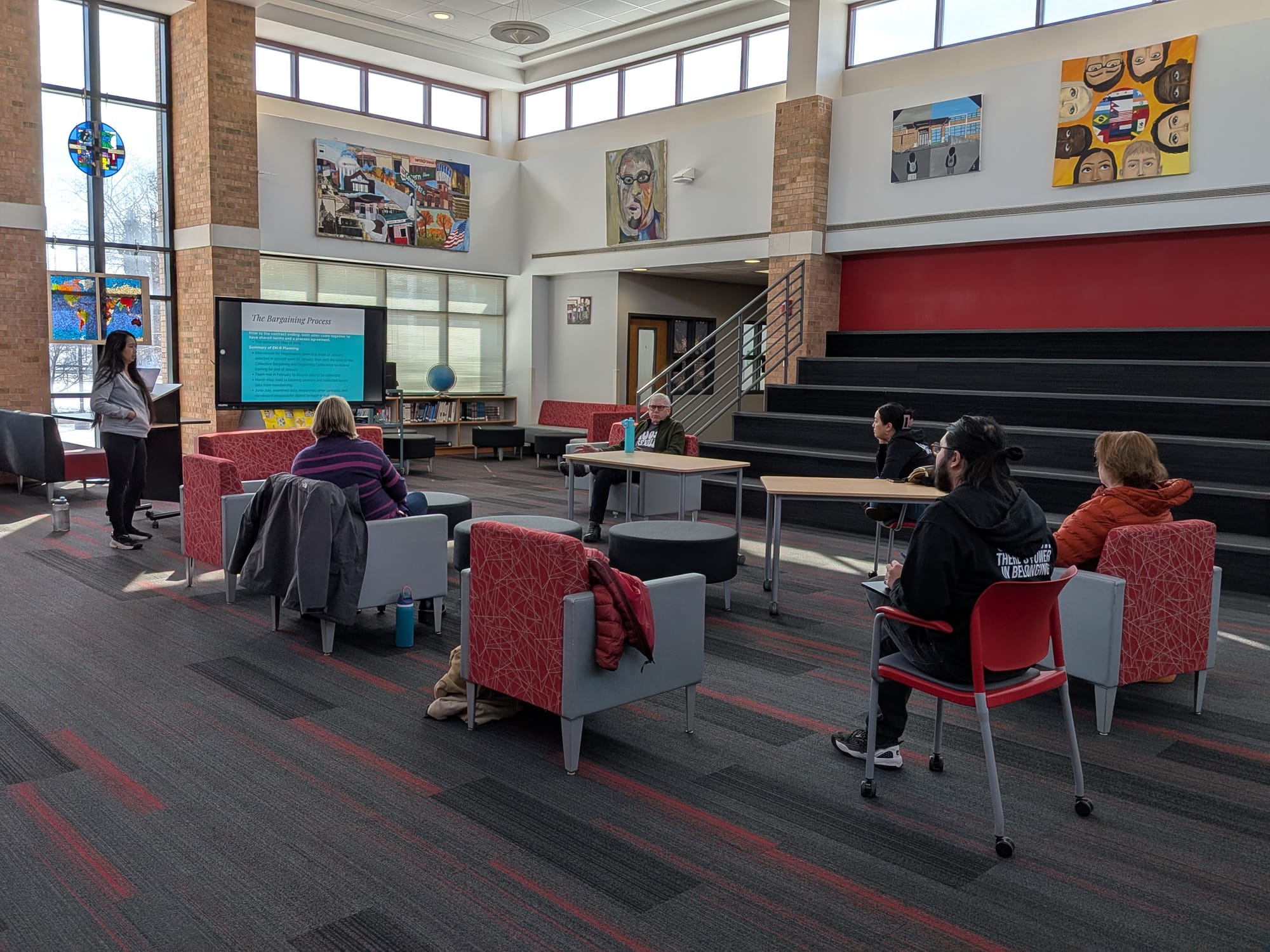
On Saturday, February 21 union leaders held a community listening session at RAHS to share information about the contract negotiations and answer questions. Less than a dozen people were present, which union member Brooks Kidarta chalked up to last-minute communication. Those present included teachers, a parent, and school board director Michelle Morse-Wendt.
Contract Negotiations
District leaders and union representatives have been meeting regularly since August 2025 to discuss the teacher contract. They began formal mediation, at the request of union leaders, in January 2026, to try to make progress. They have had three sessions so far with the Bureau of Mediation Services.
The teacher contract is a document that includes working conditions, hours worked, breaks, prep time, pay rates, among other terms and conditions.
“It’s a pretty comprehensive document that helps us understand how to support licensed teachers,” said Kenyatta McCarty, executive director of human resources at Roseville Area Schools.
The contract is reviewed every two years and updated as needed or negotiated. The contract currently in negotiations covers school years 25-26 and 26-27. Since the new contract hasn’t been settled yet, Roseville teachers are working under the previous contract. Any changes to the contract would be implemented retroactively, such as receiving backpay if negotiations lead to increases in compensation.
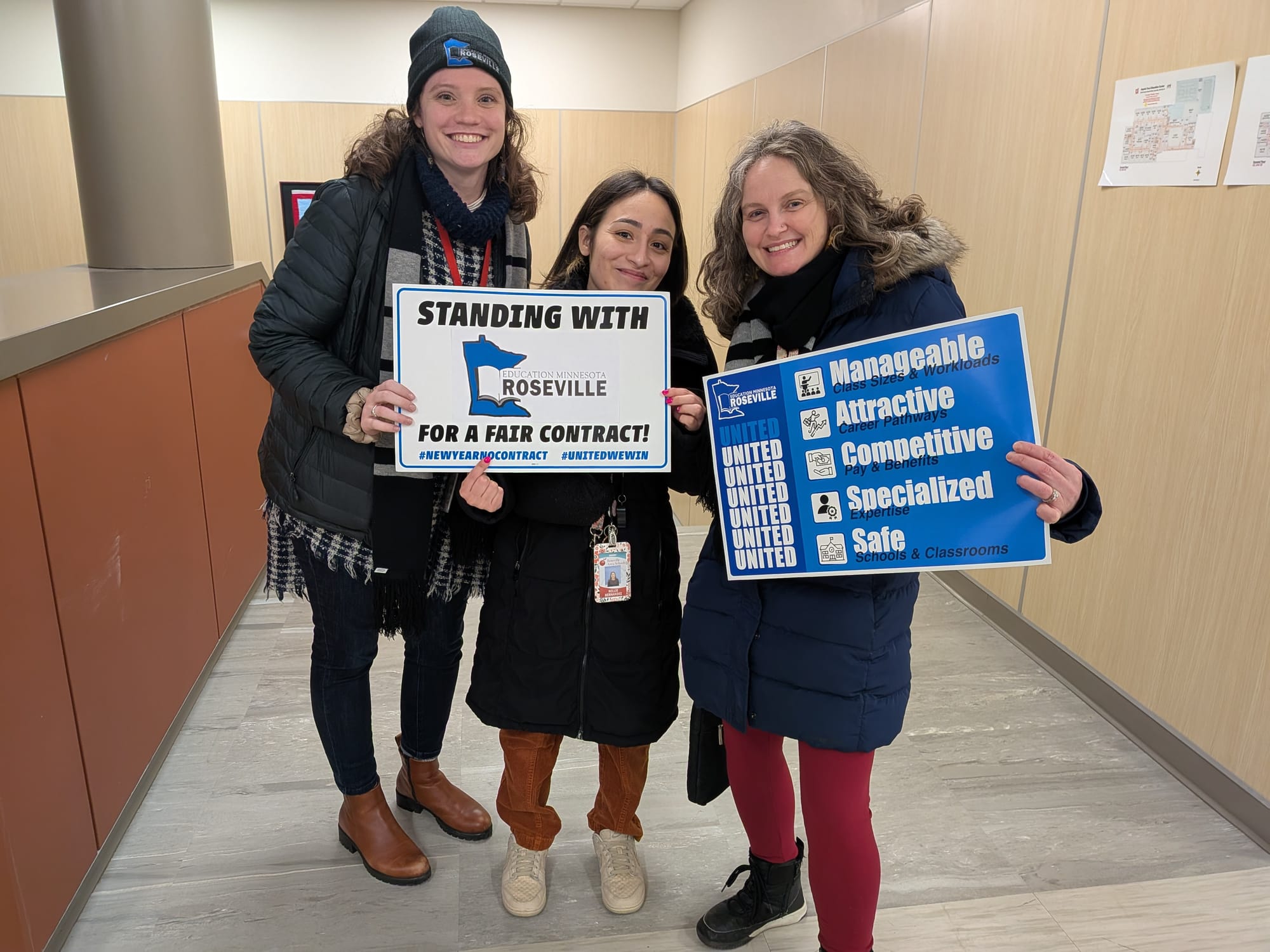
The union is negotiating for “competitive pay” for new teachers, salary growth for experienced teachers, and additional compensation for teachers who use their specialized skills and added work to serve students with unique needs, among other items. They are also concerned about rising health insurance premiums and how that impacts take home pay.
For context, the starting salary for a teacher in Roseville Area Schools is $49,171 and ranks 59th in the state compared with other public school districts. The maximum salary, for those with the highest level of education and fifteen years of service, is $110,679. The maximum salary ranks the district 8th in the state.
There are some teachers in the district who are struggling to make ends meet, including paying for things like childcare, groceries, and housing, according to Lê Selmer.
She wanted to recognized that the Roseville Area School Board has always been very supportive of educators and is pro-public education. They don’t have an adversarial relationship.
“We’ve known that they’ve always had our back. We’re asking them to continue to have our back,” Lê Selmer said.
What happens during mediation and what decisions have been made are confidential until a settlement is reached.
Both district leaders and union representatives say that considerable progress has been made in mediation recently.
There are varying perspectives within the union, including members who would like to strike. But that’s looking unlikely at this point.
“Our team is not in a place where we will be asking for a strike vote,” Lê Selmer said.
Budget Pressures
Employee salaries and benefits make up 80 percent of the General Fund, which comes from a combination of property taxes, state funding, and federal funding. The capital projects levy that voters approved in November 2025 goes specifically for technology and safety needs, not teacher salaries.
Roseville Area Schools is facing budget challenges due to external factors. Among other factors is a five-year declining enrollment trend at the elementary level due to birth rate changes, which will alone provide potential for future teacher cuts, according to Superintendent Jenny Loeck. There is currently a million dollars less in compensatory revenue coming in from the state. This funding is directly connected to enrollment and educational benefits related to economic need. There are also unanticipated state level cuts to special education funding on the horizon.
“As a career educator, former Education Minnesota–Roseville member and classroom teacher, and now Superintendent of Roseville Area Schools, I support a fair and competitive contract for our teachers. At the same time, any agreement must reflect the school board’s responsibility to taxpayers by aligning with current statewide salary benchmarks, our student enrollment (which directly drives district funding), and the need for a healthy fund balance. That fund balance functions as the district’s financial protection, helping us manage unexpected costs and maintain stable programs for students,” Loeck said.
Union leaders want the school board to be fiscally responsible too, while also prioritizing educators when difficult decisions about the budget need to be made. They view their negotiations strategy as a “partnership with the school board.”
“We just want our district to continue to keep teachers a priority even when times are hard and finances are hard, because they are the heart and soul of the district,” Lê Selmer said.
“It is also a matter of getting the community and the public and the board to realize, we need to continue in the face of adversity to be courageous in how we manage our money and how we invest in students. Because we believe there is a pathway forward that both honors the dignity and integrity of our educators who put their literal blood, sweat, and tears into this district and that will also allow the board to continue the fiscal responsibility of the school district,” Lê Selmer said.
Next Steps
The teachers union is holding a "solidarity rally" at Aŋpétu Téča Education Center on Feb. 24 at 5:00 p.m. Speakers will include State Representative David Gottfried, a representative from Education Minnesota, and Roseville teacher Maria Lê Selmer, president of Education Minnesota Roseville. Union members plan to go to the school board meeting community input session directly after.
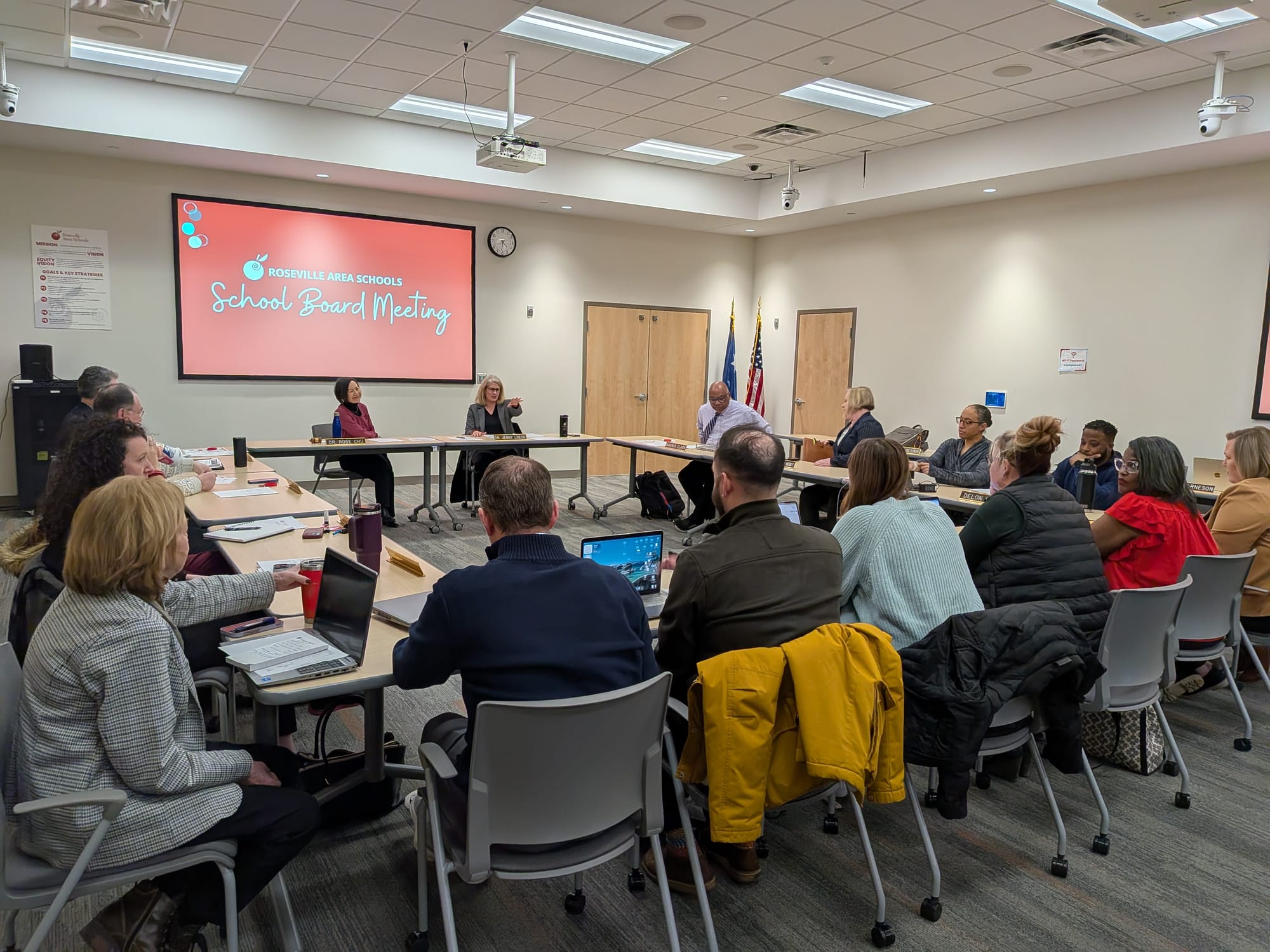
The school board will be meeting in a closed session to discuss labor negotiations strategy after the regular school board meeting on Feb. 24. There will be another mediation session from 10:00 a.m. - 5:00 p.m. on Feb. 25.

 gpmartinson