Roseville’s Climate Equity Action Plan and You
How Roseville is setting goals to address climate change

The City of Roseville has been developing a Climate Equity Action Plan in collaboration with an outside consultant and feedback from the community. A draft of this plan was presented to the city council on April 6 and community members are currently reviewing and providing feedback.
We connected with Noelle Bakken, sustainability specialist at the City of Roseville, to find out what the Climate Equity Action Plan has to do with the average resident of Roseville and what you can do in response.
What is the Climate Equity Action Plan if you don’t have time to read the whole thing?
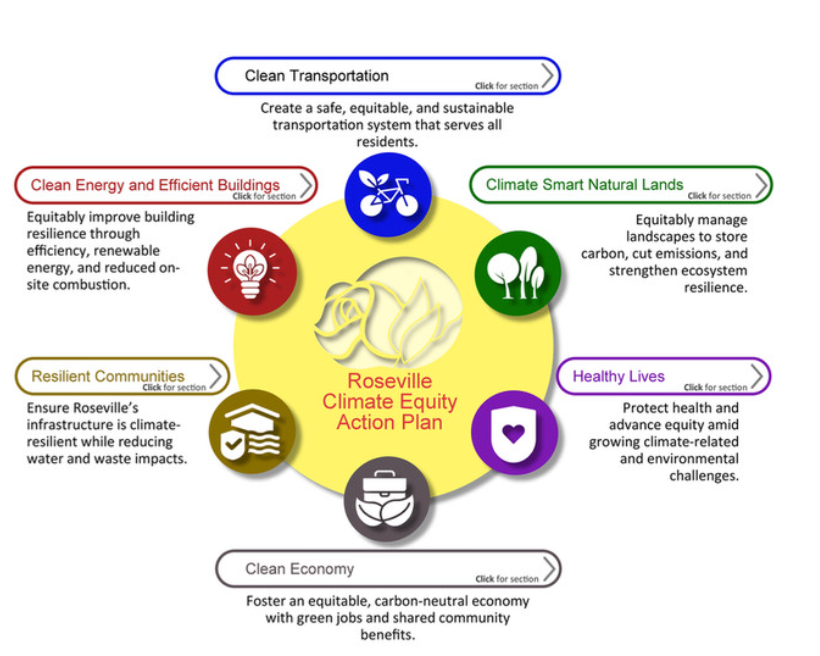
If you don't want to read all one hundred pages, start with the introduction. The website has the plan broken up into sections so that you can focus on the areas you're most interested in.
“The introduction really…sets the stage for why we're doing this and…what our goals are, and it shows what the city's overall emissions footprint looks like and where we're going,” Bakken said.
The Climate Equity Action Plan outlines strategies and actions to reduce greenhouse gas emissions and build resilience to climate impacts while supporting and building equity within the community. It is designed to guide city planning, programming, and budgeting related to climate change and mitigation. It's also meant to inform and guide non-governmental groups and residents in Roseville.
“This plan is looking out for the next ten years. So this is setting goals. We have goals for reaching [carbon] net zero by 2050, but a lot of these goals are focused over the next decade. So, [the plan includes] short-to-near term goals that we're trying to reach in a small window of time,” Bakken said.
The City of Roseville has been working with the Maplewood-based consultant company Pale Blue Dot LLC since August 2025. Pale Blue Dot is a “a leading provider of thoughtful and comprehensive carbon, climate change, sustainability, and renewable energy planning and services,” according to the website. Pale Blue Dot has worked with multiple other cities in the metro, including Falcon Heights which completed their plan in May 2025.

Bakken recommends also looking at the climate action baseline assessment. This includes six different goal areas and some of the vulnerabilities that have been identified.
“It kind of wraps up all the baseline document information into one tidy, more digestible thing to read,” Bakken said.
What was the process to get to this point?
The City of Roseville set some sustainability goals in the 2040 Comprehensive Plan, which was last adopted in 2020 and is updated every ten years. Those goals included reducing greenhouse gases by 80 percent by 2050 relative to 2005 levels and increasing the city’s percentage of renewable energy usage.
The city has not had a specific plan, funds, or roadmap for achieving these high-level goals, and instead has been trying things on a piecemeal basis.
“I've been calling it Shiny Object Syndrome, because we've just been kind of grasping at projects opportunistically as they arise,” Bakken said.
Bakken was hired by the City of Roseville as an intern in 2021 when she was finishing her Master's degree in urban planning, and then hired full-time in 2023, which led to increased interest and capacity to focus on sustainability goals.
Then the city started allocating budget funds for sustainability work. The city applied for and was awarded a $49,975 local climate action planning grant from the Minnesota Pollution Control Agency, which required a 50 percent match. Ramsey County also received a grant from MPCA which helped fund several city climate equity plans, including Roseville’s. These combined funds made it possible to hire the climate consultants from Pale Blue Dot.
“It's been a great experience to finally start getting some of these plans in place,” Bakken said.
The Draft Climate Equity Action Plan brought together the work she has been doing with the city and the feedback received from residents, staff, and the city council into a set of concrete goals to work toward.
Part of the process was the development of a climate justice advisory group, made up of around ten residents, to be part of the planning process and help center equity and justice. The city is also working with the consultant Change Narrative LLC, to co-produce five community member stories for inspirational climate storytelling.
How to make a personal climate action plan?
If you're wondering where to start, Bakken recommends picking an action from the list of ideas in the Implementation section of the Plan in order to "gain some agency."
She often sees people getting caught in a “perfectionism trap” while also experiencing a lot of climate anxiety and stress over climate change.
“It takes a lot of people doing a lot of little things imperfectly—versus one or two people doing everything perfectly—to make real change,” Bakken said.
“When you take action in any kind of way, it's one small step towards doing the right thing and making this world a better place. You know, if you're, like…fixing a hole in a sock, or if you're finding a way to reuse a jar of pasta sauce or something like that, you know, even as simple as that. It doesn't have to be putting solar panels on your roof, although that is very cool. A lot of those big projects are out of reach for people. And so there are lots of smaller ways that you can take action and it feels good to do those things and see those projects take place.”
Heating and cooling homes and transportation are the two biggest drivers of greenhouse gas emissions, according to Bakken. She recommends owners of older, single-family homes get a Home Energy Squad visit. (The City of Roseville will pay part of the cost!) This will give you an idea of the kinds of projects you could do to make your home more energy efficient.
“First step is really reducing the amount of electricity and natural gas that we're using, and the best way to do that is doing insulation and air sealing. The Home Energy Squad visit really demystifies that whole process,” Bakken said. They will also get you access to vetted contractors to get the projects done at a lower price.

For transportation, Bakken recommends reducing the amount of car trips.
“Try walking to someplace just to get ice cream and see how that feels and notice how you maybe experience the world differently. But see what it just takes to do. You don't have to be a bike commuter year round. You don't have to walk 16 miles to get to work and back, but see if there's any kind of way you can replace a car trip with some alternative way to do it. And, you know, give it a try,” Bakken said.
The actions in the plan are more like a menu of options than a checklist of everything that will be accomplished, Bakken explained. There will be limitations to what will get done and how quickly, based on the city’s capacity, funding, and political will.
Residents are encouraged to share feedback on what actions and goals to prioritize. The plan can also inspire non-government groups, businesses, and individuals to take steps to meet some of the goals too.
What can Roseville business owners do?
There is an energy audit program for businesses called Energy Smart. Similar to the home energy audits, this program will help business owners figure out what kind of projects they can do to be more energy efficient and get access to substantial discounts.
“BizRecycling is another way. Waste doesn't make up as much of a difference as far as a greenhouse gas emissions thing, but it's a very visible action. A lot of businesses want to do the right thing, and part of that can just be by starting to do more recycling, or if you are a food service business, start composting. That's something that we're really encouraging with the Green to Go [ordinance],” Bakken said
Green to Go is a City of Roseville ordinance that went into effect in 2025 that requires all businesses (and organizations at events requiring a permit or license) who serve food/beverages (free or paid) to use either recyclable or compostable take-out containers and utensils. There are some exemptions.
What has been surprising in this process?
Bakken has been pleasantly surprised by how excited other people are about the Climate Equity Action Plan. Discovering that other residents are as interested in energy efficiency, land use, and sustainability as she is has been “really, really fulfilling.”
“One thing that I've really been reflecting on, especially in the last few days, is with the Artemis Mission. Going to and from the moon, kind of seeing that whole crew reflecting on the Earth as a whole, both visually and philosophically, really has even strengthened my resolve. Like, this is this is it. We have to take care of this planet,” Bakken said.
“It's just kind of strengthened my love for this place, my love for all the people here. I'm just very proud of our community and the things that they've brought to us when they bring their comments and their questions and their ideas.”
Make your voice heard

So far, approximately 350 residents have engaged with the online surveys or attended the past community events dedicated to this topic. That’s roughly one percent of Roseville's population. Bakken wants you to know that your voice matters and she wants to hear from you. You still have time to give your feedback and opinions.
- Review the plan and give your feedback through June 6.
- Attend the next Community Meeting on May 4 from 5:30-8pm at the Ramsey County Environmental Center . This in-person event will give you a chance to tell the city which actions you want to prioritize first to address climate change. Reserve your spot. The community meeting will include a meal as an appreciation for your time and feedback.
- If you can’t attend the meeting, you can provide your feedback directly to Noelle Bakken at 651-792-7057 or noelle.bakken@cityofroseville.com
- Provide your climate hopes and vision via storytelling or artwork.
The final draft of the plan will be brought back to the city council for review in July.