Roseville’s crop art storytellers
Quinoa’s last stand
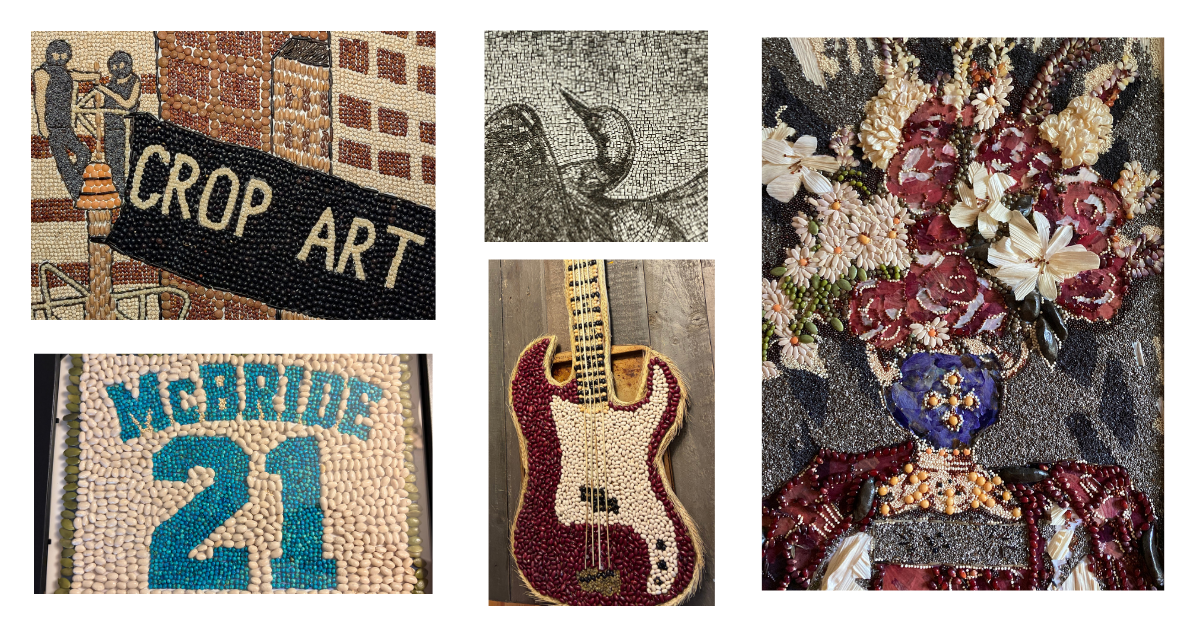
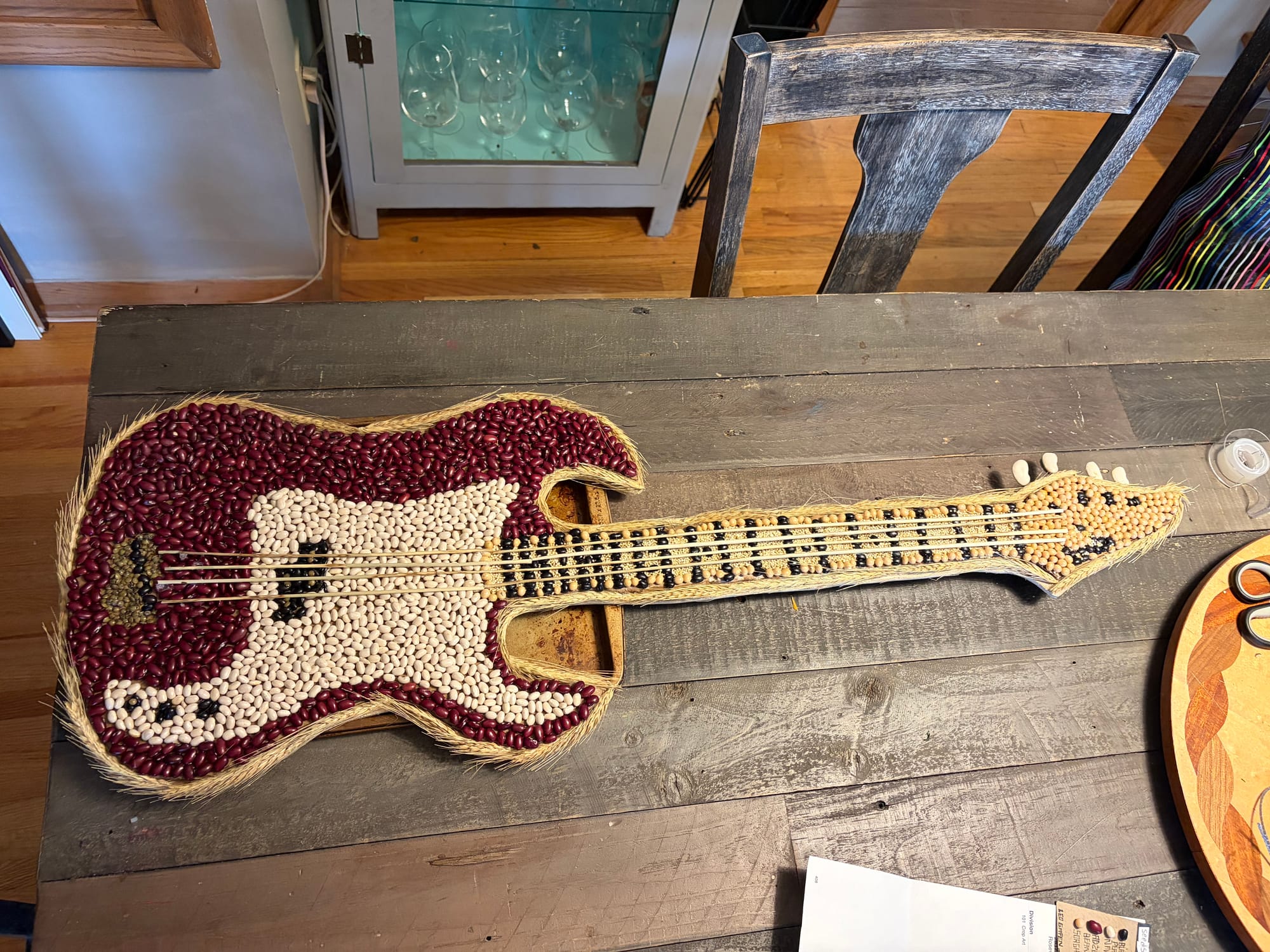
Two boys, Leo and Colin Gapen, sit on one end of a speakerphone in Roseville, attempting to explain the strange, hypnotic pull of Minnesota’s most obsessively devoted folk tradition. Leo, a high school sophomore, speaks carefully, choosing his words. He explains his practice of gluing plant matter onto a board, recalling his first submission—a portrait of his cat, Penguin. This year, he’s working from a cardboard-and-tape bass guitar template he made at a camp earlier this summer.
“I really liked how . . . it seems like a new thing that has been here forever,” Leo says, trying to capture the spirit of the craft. “If I were to put it in complicated words, I don’t know.”
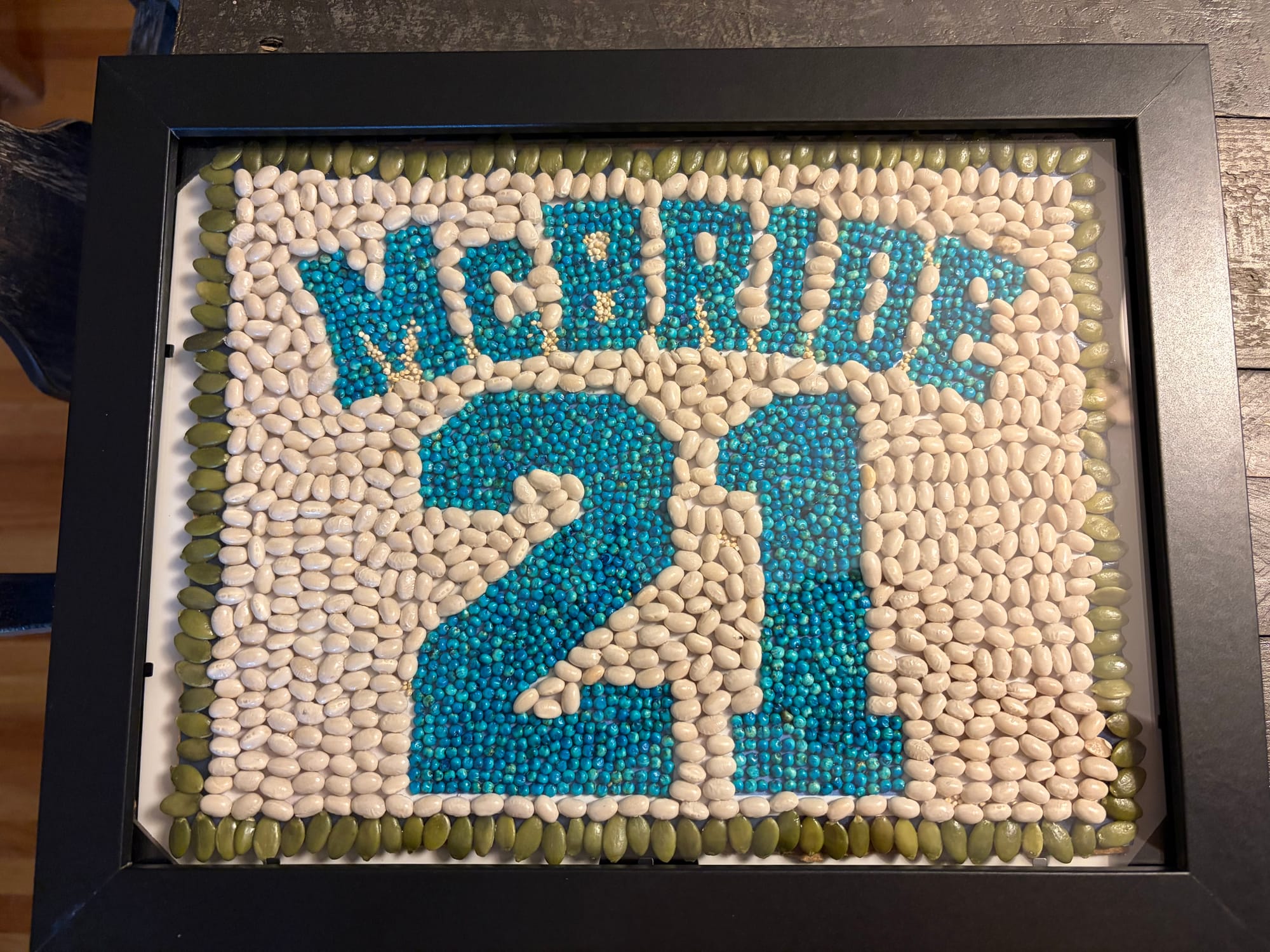
His younger brother, Colin, listens. Entering his eighth-grade year and his very first State Fair competition, Colin watched his family work before committing his own hours to a grain-rendered tribute to Minnesota Lynx player Kayla McBride.
“I like how calming it is. It’s just so easy to sit down, and you won’t stop for like two hours,” Colin says. “It’s a really fun process.”
The brothers take the questions seriously. Leo tends to lead, Colin follows, and neither interrupts the other. But gradually the formality gives way. A few giggles slip into their answers, and the young voices on the speakerphone begin to sound less like interview subjects and more like what they are: two brothers talking about something they love making.
To the uninitiated, it sounds like an elementary school craft assignment. But step into the exhibition hall at the Fairgrounds this week, and you are looking directly into the quirky, pulsing heart of the local culture. While getting a piece onto the walls of the Fine Arts building requires making it past a jury, crop art takes a decidedly more democratic approach, giving amateur artists a chance to put their painstakingly seeded creations in front of thousands of sweat-drenched fairgoers.
Tony Perkins knows exactly what he wants to put in front of that audience. “When I pick a piece, I try to take something that is topical or maybe like a pop culture thing that's having a moment.”
The Roseville resident entered the crop art scene in 2019 after taking an introductory workshop with his neighbor. Perkins, who also practices photography, initially viewed crop art as an approachable avenue to showcase work publicly at the State Fair.
For his 2026 submission, Perkins drew on the viral image of two climbers unfurling a banner atop the Empire State Building, replacing the banner’s original message with the simple phrase “CROP ART.”
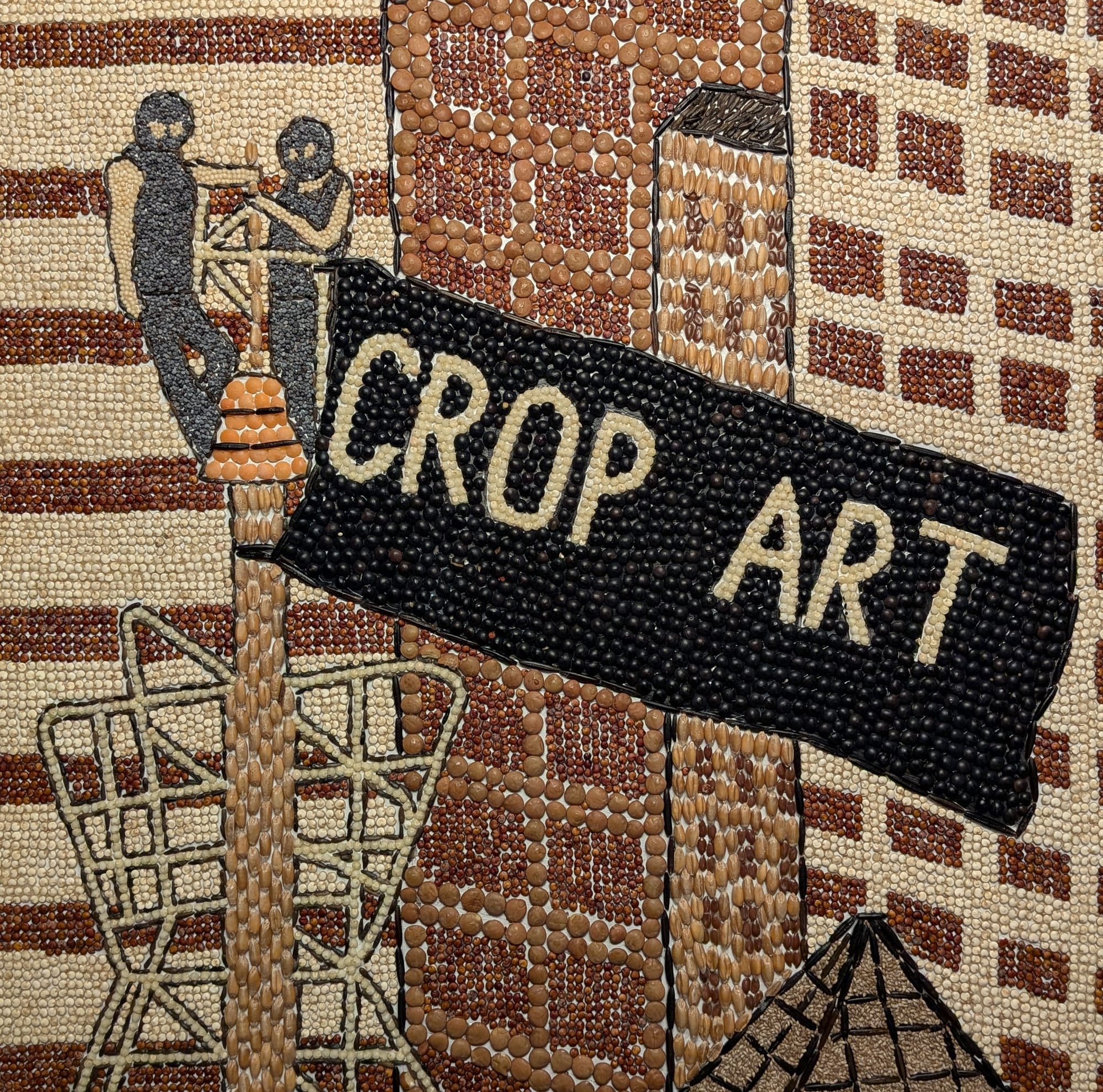
Working primarily with a toothpick to place seeds individually, Perkins estimates each submission requires 30 to 40 hours of focused labor. The final push before the deadline is the most challenging phase: “It gets very tedious, especially as you get closer to the fair... you know you have to sit inside and put seeds down one by one with a toothpick for the next two hours.”
Thirty to 40 hours with a toothpick may sound extreme, but Perkins is hardly an outlier. His neighbor Charlotte Ferlic routinely spends 35 to 50 hours on a piece. Ferlic brings a background in graphic design and corporate art direction to her crop art practice. After her children grew older, Ferlic sought an artistic outlet and, in 2019, joined Perkins in a crop art class taught by Liz Schreiber.
Her entries have included a reproduction of the Minneapolis Sculpture Garden’s Spoonbridge and Cherry (substituting a Pronto Pup for the spoon), a portrait of a rescued cathedral fox, and a crop-art rendition of the Veiled Lady with beans extending beyond the frame.
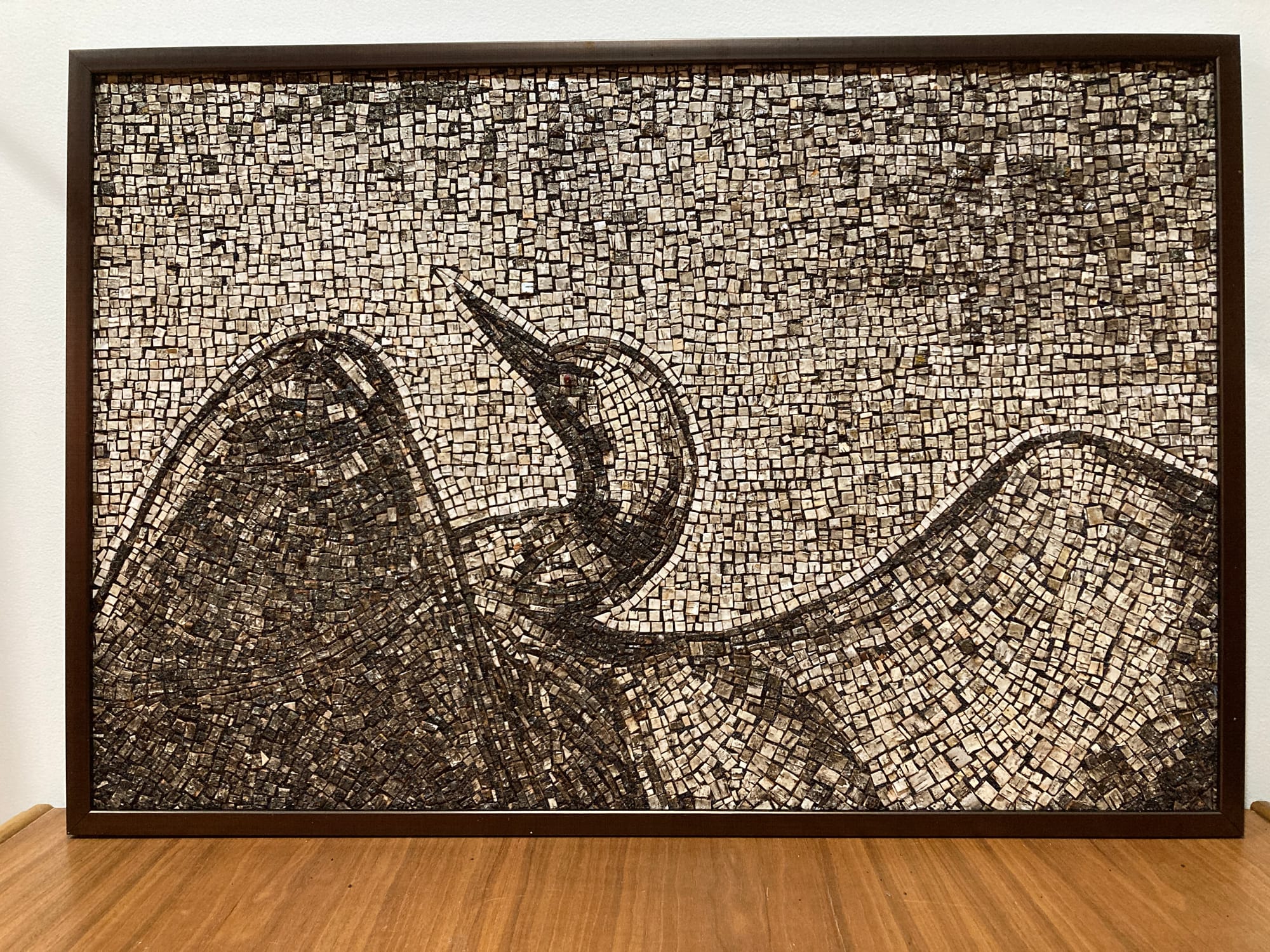
Much of Ferlic's process comes down to a peculiar kind of problem-solving: how do you make an image when your palette consists of whatever you can coax out of seeds, grains, and other plant material? For this year's loon, part of the answer came from a fallen birch tree in her neighborhood. Ferlic cut different shades of bark into tiny pieces to create a mosaic, combining them with basil seeds and wild rice.
For her second piece, Ferlic went looking for a Minnesota story. After what she calls a “Minnesota brain dump” of searches through the Minneapolis Institute of Art’s collection, she stumbled across Minnesota portrait artist Frances Cranmer Greenman. Translating Greenman’s work into seeds offered exactly the kind of puzzle Ferlic enjoys.
“I love the problem-solving,” she says. “I love taking something and making it different.”
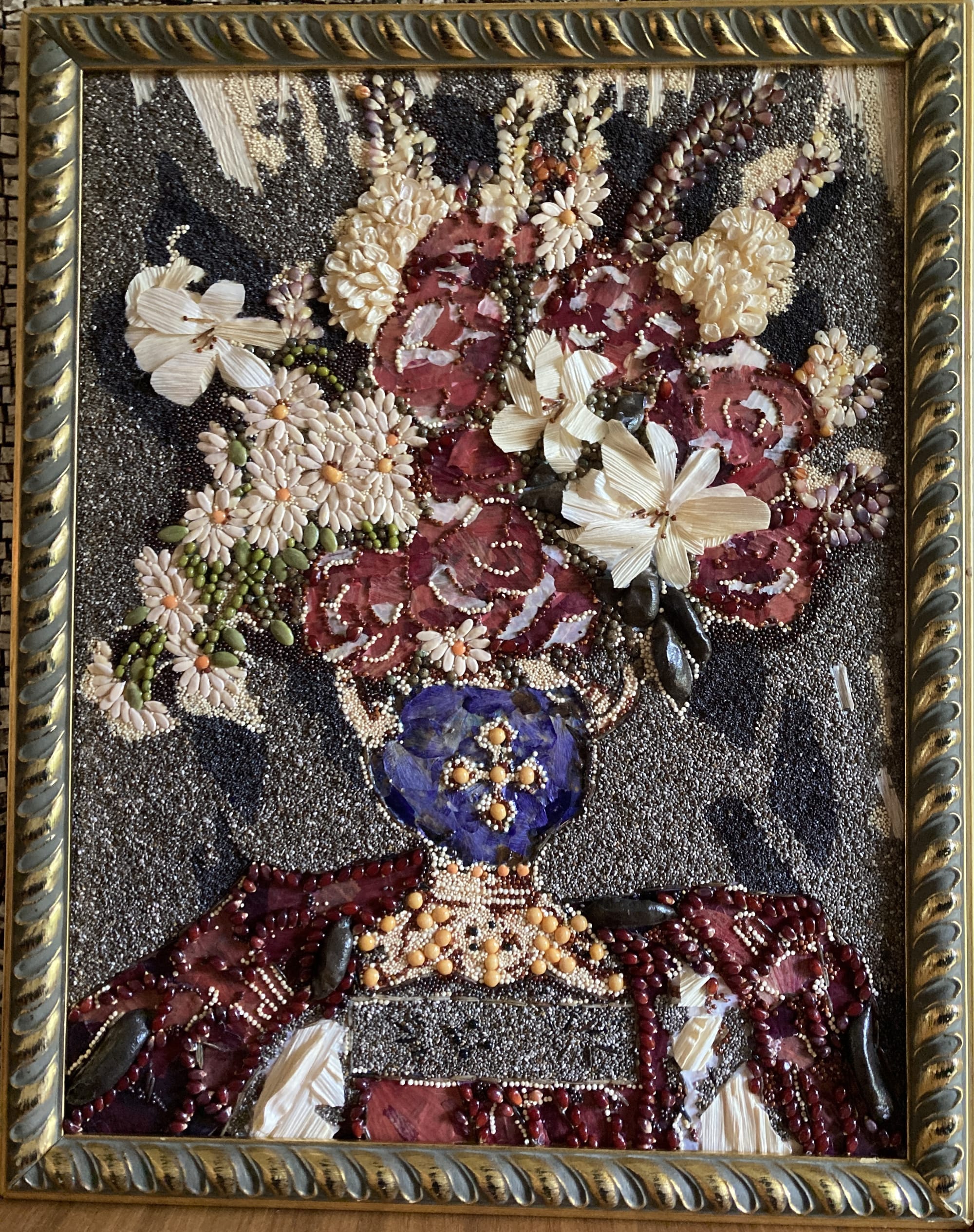
Thirty-five to 50 hours leaves plenty of time to reconsider your choices. Ferlic describes a familiar cycle: start a piece, decide it's terrible, wonder why you're doing this at all—and keep placing seeds. Eventually, she says, she usually comes around. “There’s no magic. It’s literally seeds and glue. It’s just that they take a long, long time.”
And then there’s quinoa. For crop artists, the tiny grain has been an unusually useful member of the palette. Beginning in 2027, entries containing quinoa will no longer be eligible to compete for a ribbon, a change intended to keep crop art tied to Minnesota agriculture. Quinoa can grow here for a season, but seeds harvested from those plants will not propagate in Minnesota’s climate.
Perkins, who relies heavily on white quinoa for background fill and skin tones, notes that finding an exact substitute will be difficult. “It’s white quinoa. It’s flat, it packs together very well... there is no easy substitution for it in my mind,” Perkins says, while floating millet as a potential alternative.
Ferlic echoes the loss, calling quinoa “a perfect size for making letters,” especially compared with much larger popcorn and tiny basil or poppy seeds.
Colin thinks viewers don't always see the work behind the finished pieces. “They don't see what it took,” he says, “and how long it took to put it together.”
Leo adds, “You really gotta think about the people behind it. I mean, this is our state. It’s like almost our state art in a way, and so a lot of the culture and things reflected reflect the people that live in it.”
Julie Burk is a freelance writer from Roseville with a background in nonprofit and community-based work. She is interested in art and the people who make it, and the local stories that reveal something larger about the communities we live in.