What's happening with Flock ALPR cameras in Roseville?
A deep dive into answers to your questions about Flock in Roseville, MN

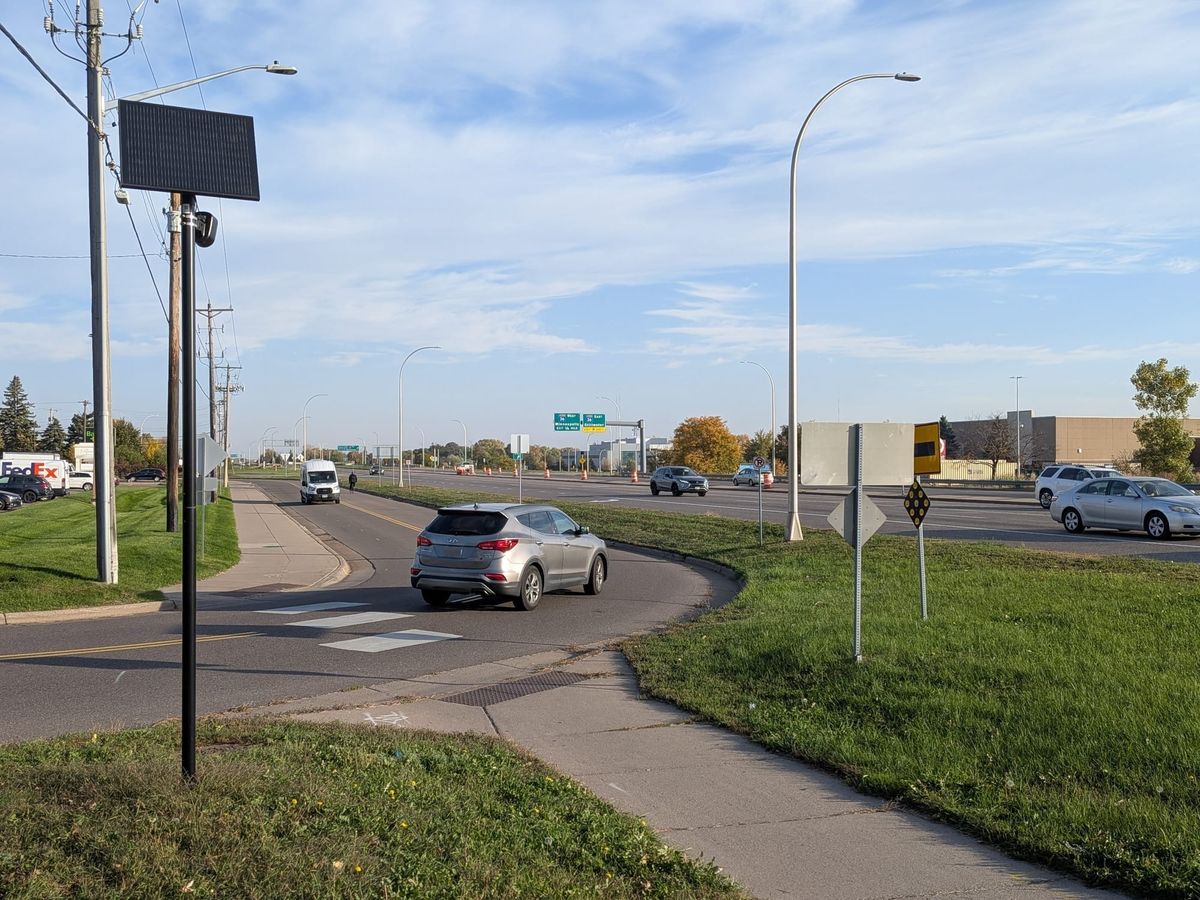
If you’ve been paying attention to news from around Minnesota and the country, you’ve probably heard about Flock cameras, a brand of Automated License Plate Reader. They are a type of surveillance technology that takes pictures of vehicles and runs their license plate and other identifying features through a law enforcement database in real time. ALPRs are sold by various companies, including Flock Safety, Axon, Motorola, and others.
How do Flock ALPRs impact Roseville?
This topic came up numerous times in our August audience survey in requests for future reporting and in questions for the candidates for Roseville Mayor and City Council. We followed up with respondents, interviewed Roseville Police Chief Erika Scheider, and did a deep dive into ALPR use and regulation in Roseville.
Roseville Police Department contracts with Flock Safety
The Roseville Police Department contracts with Flock Safety to operate eleven ALPRs. At $3,000 per camera, the City of Roseville pays for a third of the cameras and the rest are funded by private businesses, property owners, and grants, according to Police Chief Erika Scheider and confirmed in budget documentation.
There are additional ALPR cameras in Roseville operated by private businesses with direct contracts with Flock or other companies, including three at HarMar Mall.
The City of Roseville entered into a contract with Flock Safety in January 2024 to install four fixed ALPR cameras to be stationed at and paid for by Rosedale Center. This was at the request of retailers in response to an uptick in retail crime, according to Scheider.
This agreement and a new ALPR policy was approved by the Roseville City Council as part of the consent agenda on January 29, 2024. Since it was part of the consent agenda, there was no city council discussion or public comment on that specific agenda item. The police department did share the proposed policy with the Multicultural Advisory Committee and City Attorney.
The police department first began using ALPR technology in 2012, funded by a grant. At that time, these were large cameras mounted on the back of police squad cars. The cameras looked for license plates associated with stolen cars and serious warrants, according to Scheider. Now, rather than externally mounted cameras, ALPR technology is built into squad cars.
You can find the location of ALPR cameras operated by law enforcement on the Minnesota Bureau of Criminal Apprehension website. Ten of Roseville Police Department's cameras are listed here. The eleventh is awaiting installation so has not been reported.

What data do ALPR cameras collect?
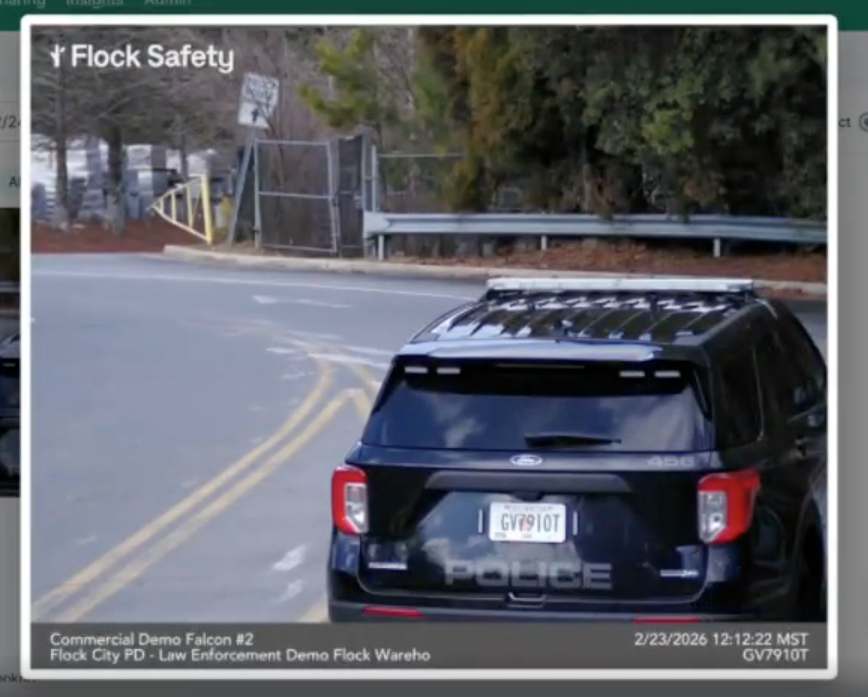
License Plate Readers take a photo of the back section of the vehicle, which includes the license plate; make, model and color of the vehicle; and any additional decals or distinguishing features. The photos also include the back window, but not usually any detail of what’s inside, according to Scheider. If someone were to be looking directly out of the back window, there is a chance their face would be visible.
ALPR cameras aren't programmed to take a photo when a pedestrian or bicyclist is nearby. However, if a person were walking or biking next to a vehicle, they could appear in a photo that also includes a vehicle, according to Flock Safety.
Flock ALPRs do not include facial recognition technology and Roseville Police Department does not use other forms of facial recognition technology, according to Scheider.
How does law enforcement use ALPR data?
When an ALPR camera detects a license plate nearby, a photo is taken of the passing vehicle. The vehicle’s license plate and other visual information is instantly entered into a Flock database, which is cross-checked against a national crime database in real time.
This national database is from the National Crime Information Center (NCIC), which is a computerized index of criminal justice information. It includes data on people and vehicles suspected of serious crimes, such as auto thefts, assaults, abductions, gang activity, and federal warrants. Missing persons may also be in this database, whether or not their disappearance is related to a suspected crime.
Authorized law enforcement personnel can access this information for direct criminal investigations. Patrolling officers also receive automated alerts any time a vehicle that’s in this database is detected on a nearby ALPR camera.
The NCIC database can also be accessed during traffic stops.
“If you're not wanted or you don't have a warrant, you're not a missing person, you don't have a stolen vehicle, then that data just goes into the system and it's purged automatically after 30 days,” said Scheider.
By default, Flock’s system is currently set up to delete the stored data after seven days, but this is subject to change depending on local laws. Minnesota law sets the maximum number of days ALPR data can be retained to 60.
How has the RPD used ALPRs in recent cases?
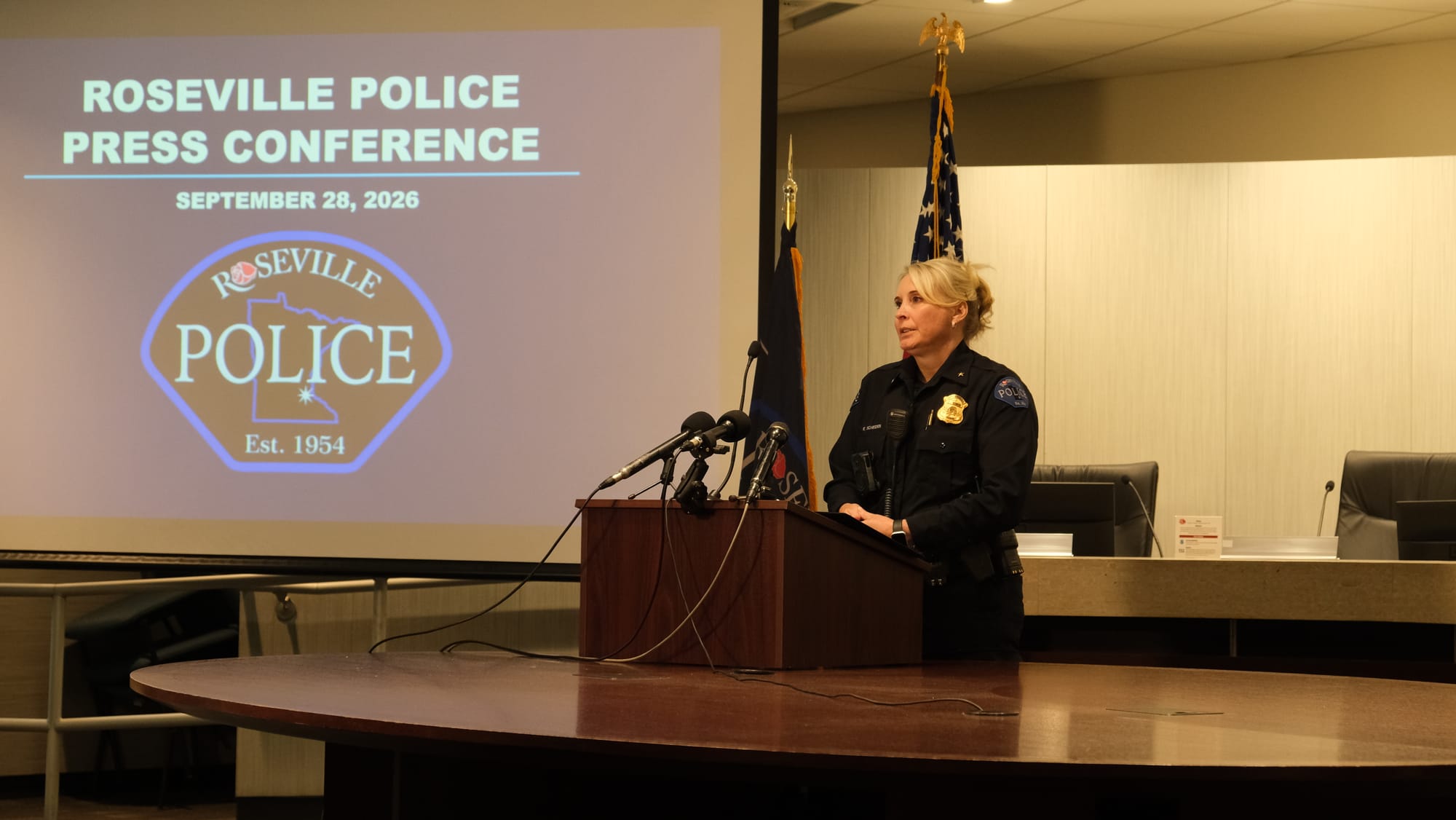
In August 2026 there were two different cases with suspects wanted for assault and strangulation, Scheider explained.
“The original agency that was investigating had flagged that this person fled in this vehicle. So they entered an alert, it got entered into the national database and so our officers were alerted on two different occasions that the suspect or the suspect’s vehicle had just pulled into a parking lot in one of our retail centers. So they went over, found the car, ended up finding the individual, was able to confirm it, and make an arrest on two domestic assault cases,” Scheider said.
ALPR alerts have also helped the RPD recover stolen cars. According to Scheider, people driving a stolen car often go to a retail center to commit additional thefts or carjackings. If their vehicle is already in the national database, the ALPR at the retail center would identify the match and alert the police officers on patrol nearby.
“This allows us to be proactive. Hey, there's a stolen car that just came into your retail center, and we're able to go be proactive and arrest them before another crime is committed, before they steal another car,” Scheider said.
After a shooting at a retail center in Roseville a couple of years ago, someone had a description of a vehicle, but no license plate, according to Scheider. Roseville detectives searched the ALPR database for the specific parking lot and found a vehicle that matched the witness’ description. That enabled them to get the license plate information, which they could then use to search more specifically to track the vehicle down in another city in the west metro.
“When it all pieced together…we were able to find and arrest the individual and then tie them to a number of different cases. I don't want to say that this was all because of ALPR. I mean, there's a lot of other things that go into it, but without that piece, we would have had a basic white car sedan. We probably would not have solved this case,” said Scheider.
ALPR technology was also used to locate the suspect in a kidnapping and assault case which took place in Roseville in September 2026.
Data privacy concerns
Concerns about data privacy and misuse of ALPR data have led to public outcry in some communities and even vandalism.
“It makes me wonder if I am a neighbor or a prospective criminal,” said Roseville resident Andy Johnson. He’s concerned about the risk of data breaches and is skeptical that internal policies that restrict sharing could stop potential federal government overreach.
Roseville’s ALPR policy explicitly prohibits the sharing of data for the purposes of federal immigration enforcement. Feedback by residents during Operation Metro Surge last winter led the Roseville Police Department to tighten up their ALPR policy with additional regulations. (More on that below.)
Johnson would like Roseville to discontinue its use of ALPR cameras entirely.
“I'm opposed to Flock cameras and all variants of this new generation of invasive cameras. I've heard of some cities removing Flock and going to Axon or whatever other product, which obviously misses the point of people's anger,” Johnson said.
Kathy Ingulsrud, a Roseville resident, supports the use of ALPR cameras for criminal investigations.
“[ALPRs] seem to be very effective for helping with property crimes, especially stolen vehicles and for outstanding warrants, and maybe gang movements,” Ingulsrud said.
She also supports more oversight and protection of personal privacy as well as limits on how data is stored. She is concerned about potential misuse of the data.
“I do not approve of Flock for immigration tracking, unless there is another intervening crime. 'Catching women' from other states who may come to Ramsey County for reproductive or OBGYN care is also a concern,” Ingulsrud said.
Reporting from the Star Tribune and the Minnesota Reformer revealed that ICE agents were collecting license plate numbers of protesters and anti-ICE organizers and storing them in a database during Operation Metro Surge. This included recording license plate numbers from the Prince of Peace Lutheran Church parking lot in Roseville during an anti-ICE organizing meeting. According to the Minnesota Reformer, “The agents then compiled a dossier including attendees’ names, photos, addresses, vehicle registrations, family and employment information.”
ALPR search request data logs
The Roseville Reader obtained ALPR data search logs from the Roseville Police Department for December 1, 2025 through August 31, 2026. These are logs of every search of Roseville’s ALPR data by the Roseville Police Department and external law enforcement agencies. In that time frame, there were approx. 1,700 searches by the RPD and 39,000 searches by outside agencies. The log includes which agency requested information and the provided reason for the search. It does not include license plate or vehicle information. The log also does not indicate whether or not data was shared with the agency, just that it was requested.
“Only designated and approved PD personnel who have a legitimate need for access based on their specific role are authorized to search or access the ALPR data. This includes detectives, Community Action Team officers, and analysts, for example. It is not available to everyone within the PD nor can anyone else in the city access the system. This access limitation applies to RPD's own ALPR data as well as data made available to RPD through our data-sharing agreements with other agencies,” according to Scheider.
In the time frame included in these data logs, there were no data searches by federal agencies. The most frequent agency was the Houston Texas Police Department, which made nearly 26,500 searches, followed by the Grand Rapids, MN PD and Texas Financial Crimes Intelligence Center which each made over 900 searches. The rest of the searches were by Twin Cities law enforcement agencies.
Reasons for external agency searches were predominantly for thefts, robberies, and burglaries as well as homicide and assault investigations. Reasons for Roseville PD searches were predominantly larceny/theft offenses and weapons offense investigations, among other serious crimes.
There were no immigration-related reasons recorded in the logs from internal or external searches.
Search reasons are not limited to a specific set of options and some reasons from external agencies were vague, including reasons stated as “investigation.”
Flock cameras at HarMar Mall
There are three Flock ALPRs in Roseville that the police department does not operate. These three are privately owned and operated on the HarMar Mall property. Fidelis, the owner of HarMar, has its own direct contract with Flock Safety for these cameras. There is no oversight by the Roseville police department related to how the mall owners use or share the data from those cameras. This would be the same for any private contract with Flock or other security camera system.
“At Fidelis, the safety and security of our customers, tenants, and their property is our number one priority. Large retail properties like HarMar can attract a criminal element which preys on vacant vehicles and vulnerable shoppers. To help protect those who visit and work at HarMar, Fidelis maintains 24/7 on-site security guards and visible LPR technology to deter criminal activity,” Fidelis wrote in a statement to the Roseville Reader.
Private businesses don’t have access to the national crime database or other law enforcement data, but how they store and manage the data they collect through the ALPR cameras is based on their own internal policies.
In the case of HarMar Mall, Fidelis told the Roseville Reader they restrict access of the data to Fidelis and the Roseville Police Department. According to property management, they delete the data after 30 days.
“HarMar has chosen to share access to that data with the Roseville Police Department, which means RPD can access and search the data at any time. If RPD accesses the HarMar data, the same laws, policies, and safeguards apply to that data,” according to Scheider.
Other private businesses in Roseville may have ALPRs contracts with different companies too, but there isn't a definitive list. State law only requires law enforcement agencies to report their ALPR locations to the MN BCA. This requirement does not apply to private businesses with direct ALPR contracts.
Changes to Roseville's ALPR policy
In January 2026, in response to community safety concerns during Operation Metro Surge, the Roseville Police Department made changes to restrict how long ALPR data was stored and how the data was shared.
- Data destroyed after 30 days, unless connected to an active investigation (reduced from 60 days)
- Sharing of the data restricted to law enforcement agencies in Minnesota
In August 2026, after conversations with the RPD’s Multicultural Advisory Committee, they made further restrictions. These changes include:
- Sharing of the data restricted to law enforcement agencies within the 7-county Twin Cities Metro Area
- Implementing a 30-day internal audit of the data logs, to ensure the reasons for searching the data match up with an acceptable purpose
Though the sharing restrictions are not stated in the RPD’s written policy, they are reflected in the Flock Safety Transparency Portal which lists which agencies Roseville shares ALPR data with.
The Roseville Police Department’s ALPR policy explicitly prohibits the sharing of ALPR data for the purposes of enforcing federal immigration laws or assisting in immigration enforcement activities, except as required by law or court order.
You can view the most current Roseville Police Department Policy 420 on Automated License Plate Readers online here.
Minnesota ALPR Law
Currently, the Roseville Police Department’s ALPR policy is more restrictive than state law, which requires law enforcement agencies to destroy data after a maximum of 60 days.
Legislation was first signed into law in 2015 to regulate ALPR use by Minnesota law enforcement agencies.
One of the regulations under Minnesota Statute 13.824 is a mandatory, independent biennial audit of law enforcement ALPR data logs to ensure the management of their ALPR data is in compliance with Minnesota law. The last independent audit of Roseville's was submitted on January 29, 2026. No discrepancies were noted.
In the 2026 legislative session, Minnesota Senator Clare Oumou Verbeten (District 66) introduced SF 4739, a bill to further regulate automated license plate readers and protect Minnesotans’ data privacy. Representative Brad Tabke (District 54A), authored the bill in the House.
“He wrote the bill after hearing story after story of ICE agents using Flock cameras and license plate readers to harass and stalk his neighbors in Shakopee. We're planning to introduce this bill again in the 2027 session,” Oumou Verbeten told the Roseville Reader.
The bill’s proposed regulations include, but are not limited to, requiring ALPR data to be destroyed after 48 hours, unless connected to an investigation; restricting ALPR access to Minnesota law enforcement agencies; designating the Bureau of Criminal Apprehension to maintain a local database of the data collected by ALPRs operated by law enforcement agencies; requiring private property owners to post signs notifying drivers that an ALPR system is in use; and prohibiting the sale or sharing of a person’s individual ALPR data without their consent, a court order or a judicial warrant.
Minnesota Senator John Marty (District 40), told the Roseville Reader that he’s hopeful that this or a version of this legislation will pass in the next session, due to apparent bipartisan support for further restrictions on ALPRs. He's particularly concerned about how ALPR data has been shared with ICE.
“The Roseville Police Department may be doing things the way we'd like and Roseville residents would like, but I think there are lots of sheriff's offices and others in other parts of the state that will turn over anything they can to help in, what I think, has been a really outrageous unconstitutional assault on Americans,” Marty said.
Considering local feedback
RPD Chief Scheider is open to adding further restrictions to their ALPR policy. She wants to continue to hear feedback from the community, even as she maintains that ALPR technology “is a really good tool.”
“We'll continue to look at this policy because we want to be transparent. We want to build trust with the community. We need to constantly be looking at our policies to make sure that they match what the community expects,” Scheider said.
Chief Scheider welcomes Roseville residents to email her directly at Erika.Scheider@cityofroseville.com.